
Today we have a special announcement from our friends representing Queer Death Studies Network – yet, an update highly relevant to anyone interested in or working at the intersections of ecology, environment, art and/or artistic research.
Namely, at the end of October 2025 – after five intense years of hard work – the long awaited major publication came out!
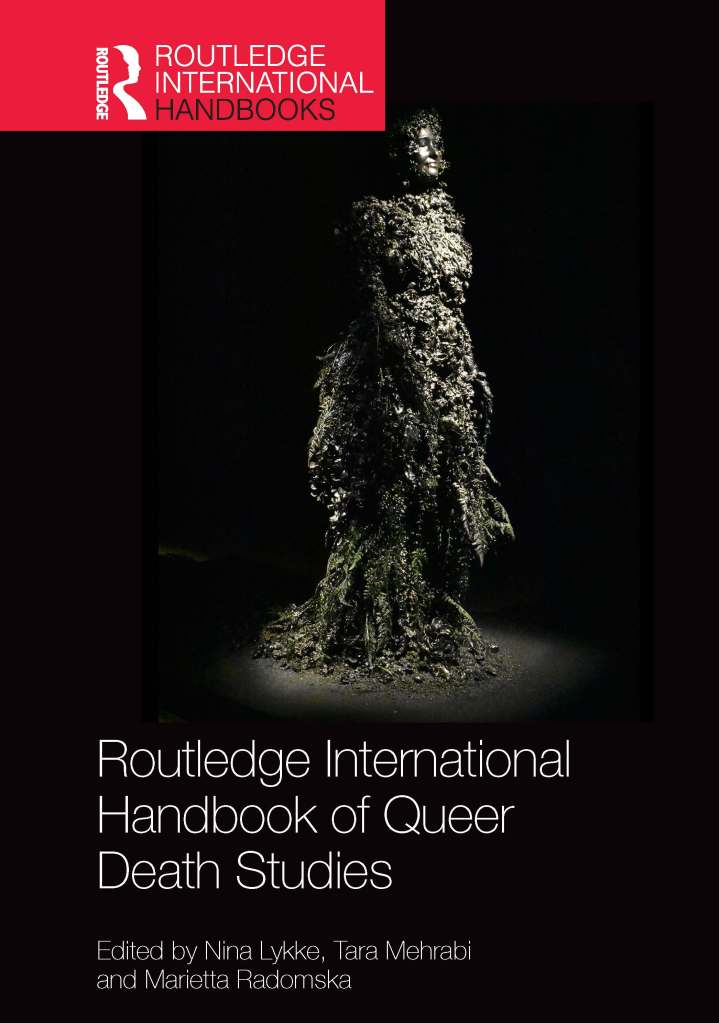
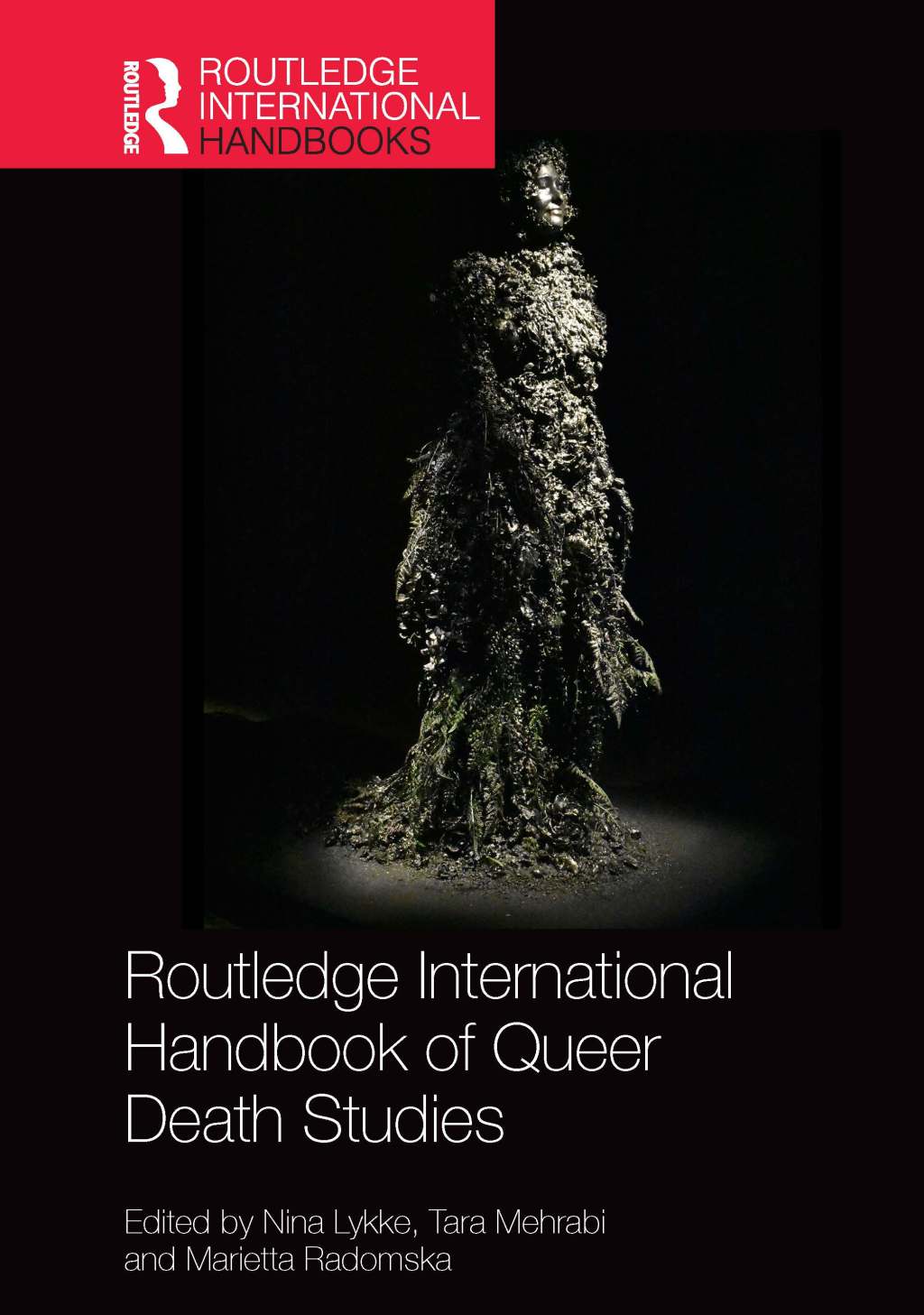
The 758-page volume: Routledge International Hanbook of Queer Death Studies, edited by Nina Lykke, Tara Mehrabi, and Marietta Radomska, encompasses 63 chapters, written by 75 authors. The book consists of seven thematic sections: I. Rethinking Life/Death Ecologies and Temporalities; II. Anthropocene Necropolitics and Extinction; III. Caring Death Activism; IV. Aesthetics and Mediated Imaginaries of Death; V. Politics and Ethics of Grieving Practices and Remembrance; VI. Co-Becoming with the Dead and Spectral Mourning; and VII. Imagining Life/Death Entanglements Differently. The book includes contributions by several team members of The Eco- and Bioart Lab.
Broadly speaking, the Handbook aims to provide a comprehensive, international cartography of Queer Death Studies, offering broad, in-depth insights into the field and its emergence through tentacular transdisciplinary networking. Taking research and art-making on death, dying, mourning, and afterlife into new directions, it explores the multiple effects of contemporary necropolitics and the proliferation of death-worlds during the current period of Earth’s history, ‘The Anthropocene’ or ‘the Age of Man’.
Informed by queer, critical posthumanist, decolonial, and feminist approaches, the Handbook presents a unique variety of both critical and affirmative reflections upon the world’s intersecting necropowers, and ethico-political potentials for social and environmental change. Contributors speculate on ways to reimagine life/ death-relations as vibrant entanglements. They also investigate modes of mourning differently, resisting necropolitical regimes that deem human and non-human individuals and populations to be disposable and non-grievable when they differ too much from the normative modern subject, Universal Man, in terms of intersections of gender, racialisation, class, sexuality, embodiment, embrainment, geopolitical positioning, or species.
A thought provoking read, this Handbook is intended for broad global audiences of researchers, artists, teachers, students, death-professionals, (health)careworkers, activists, and NGOs interested in tools to rethink and reimagine death, dying, mourning, and afterlife from intersections of queering, decolonising, posthumanising, and feminist perspectives.
The volume includes two chapters that are available in OPEN ACCESS.
 The Eco- and Bioart Lab