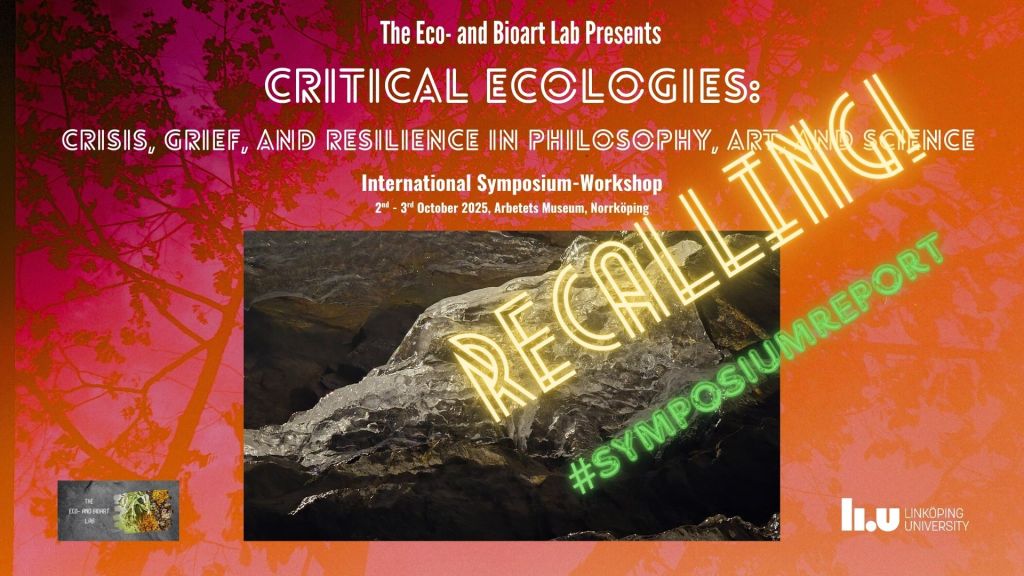
What happens when philosophers, humanities scholars, artists and artistic researchers, as well as social and natural scientists come together to discuss – critically and creatively – questions of sustainability, planetary environmental change, related issues of ecological grief, and strategies of resilience?
Those who joined The Eco- and Bioart Lab International Symposium-Workshop Critical Ecologies: Crisis, Grief and Resilience in Philosophy, Art, and Science last October had a chance to learn first-hand.
In this not-so-short summer post, we would like to bring up some visual memories from that special event.
On 2nd and 3rd October 2025 Arbetets Museum in Norrköping, which hosted the symposium-workshop, opened its rooms to over 20 speakers and more than 30 audience members. The event was organised, curated and produced by Dr Marietta Radomska, and formed part of the research project Ecological Grief, Crisis Imaginaries, and Resilience in Nordic Lights (2022-26), also led by Radomska, and generously funded by Formas: A Swedish Research Council for Sustainable Development [grant number 2022-01728].
See the video report below and the pictures from the symposium included in this article.
The starting point for the symposium workshop was the experience of finding ourselves in the midst of critical ecologies, where climate change, species extinction and loss of biodiversity, destruction of habitats and ecosystems, epidemics, and slow environmental violence are converging with wars, extractivisms, renewed imperialisms, inequalities, and (neo)colonialisms. There, the biological and the technological, the natural and the social, the environmental and the ethico-political are tightly intertwined.
With global warming unfolding in the Arctic four times faster than in the rest of the planet and the Baltic Sea turning into the largest ‘dead zone’ in the world, environmental disruption is acutely present in the social and cultural awareness close to home.
The sense of multiple crises, uncertainty, and more-than-human vulnerabilities evoke feelings of anxiety, despair, anger and grief, manifested both globally and locally in culture, scientific and popular-scientific narratives, environmental activism, and art. Simultaneously, dominant societal discourses tend to prioritise either the techno-fix solutionism (the ‘technology-will-save-us’ scenario) or the all-encompassing apocalyptic framing (‘we are doomed’).
The driving force behind the event was the timely idea that we need conceptual tools which would allow us to make sense of the converging more-than-human crises and their accompanying imaginaries and narratives; a toolbox that would assist us in resisting the binary of ‘techno-optimism vs impending doom’; and last, but not least, an apparatus that would enable us to respond to the complex conditions of the present, and thus, critically and creatively address sustainability transformations.
The symposium was structured around three keynote lectures and keynote responses, combined with panel sessions consisting of shorter papers, workshops, and critical interventions.
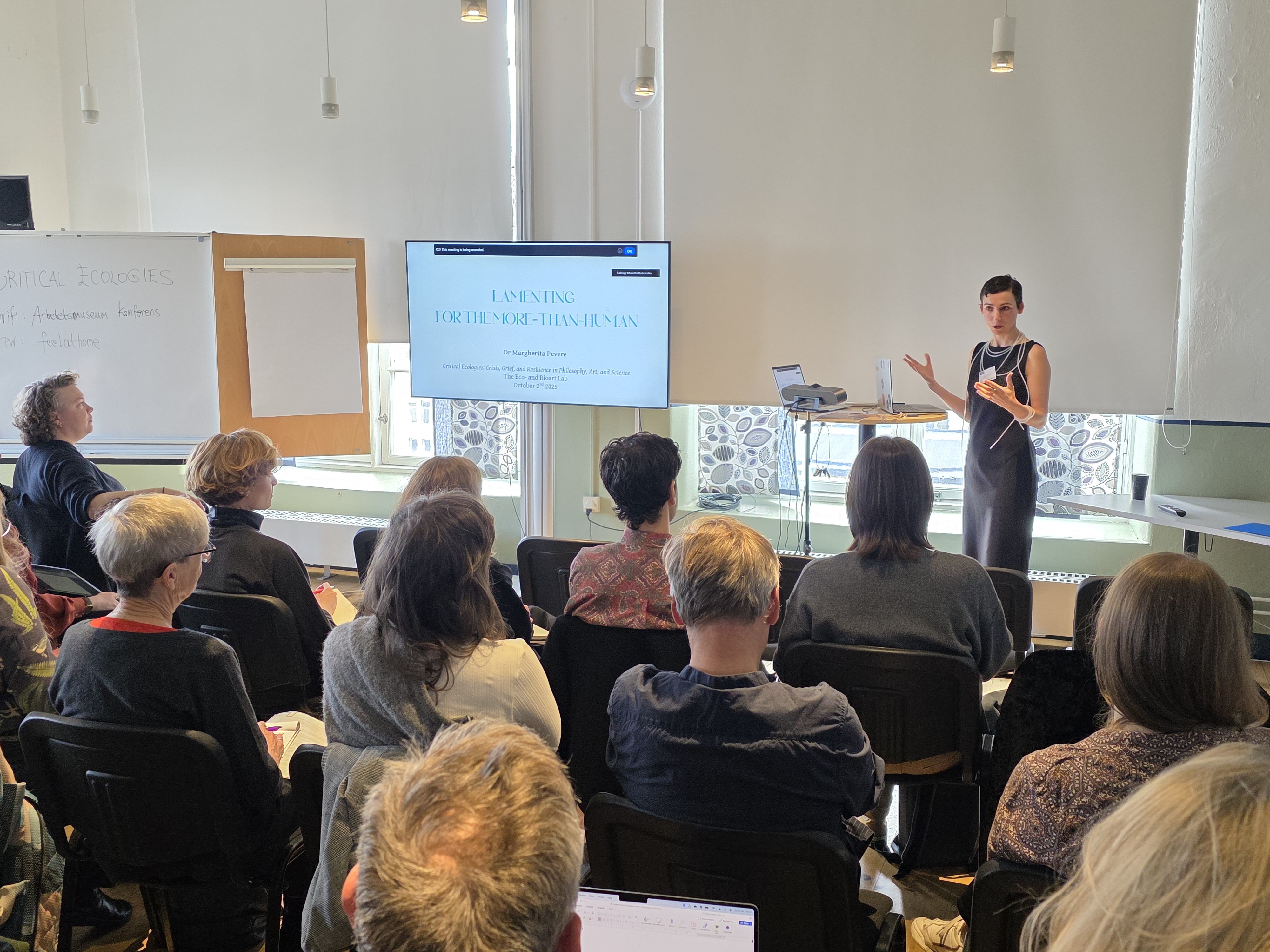
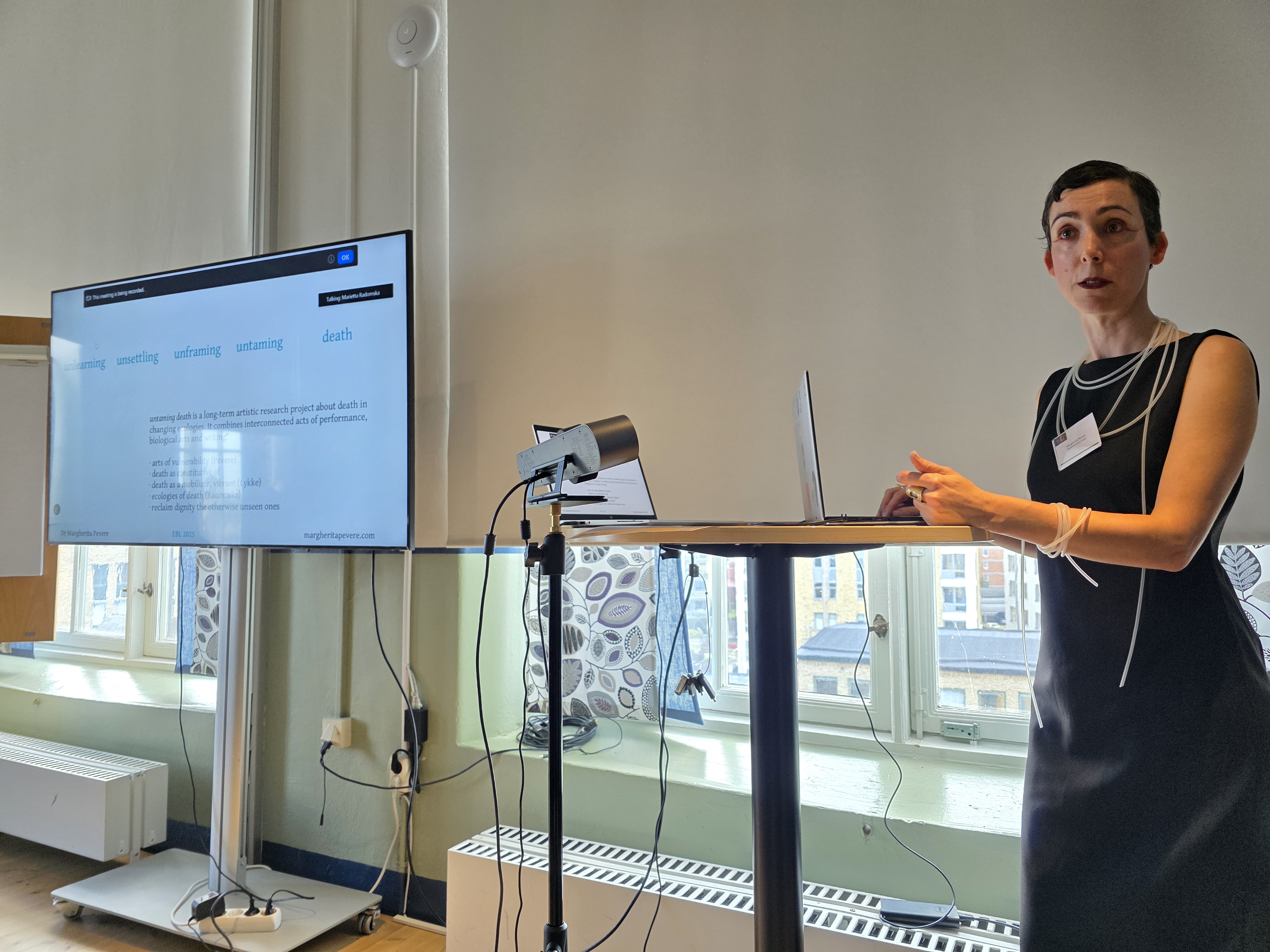
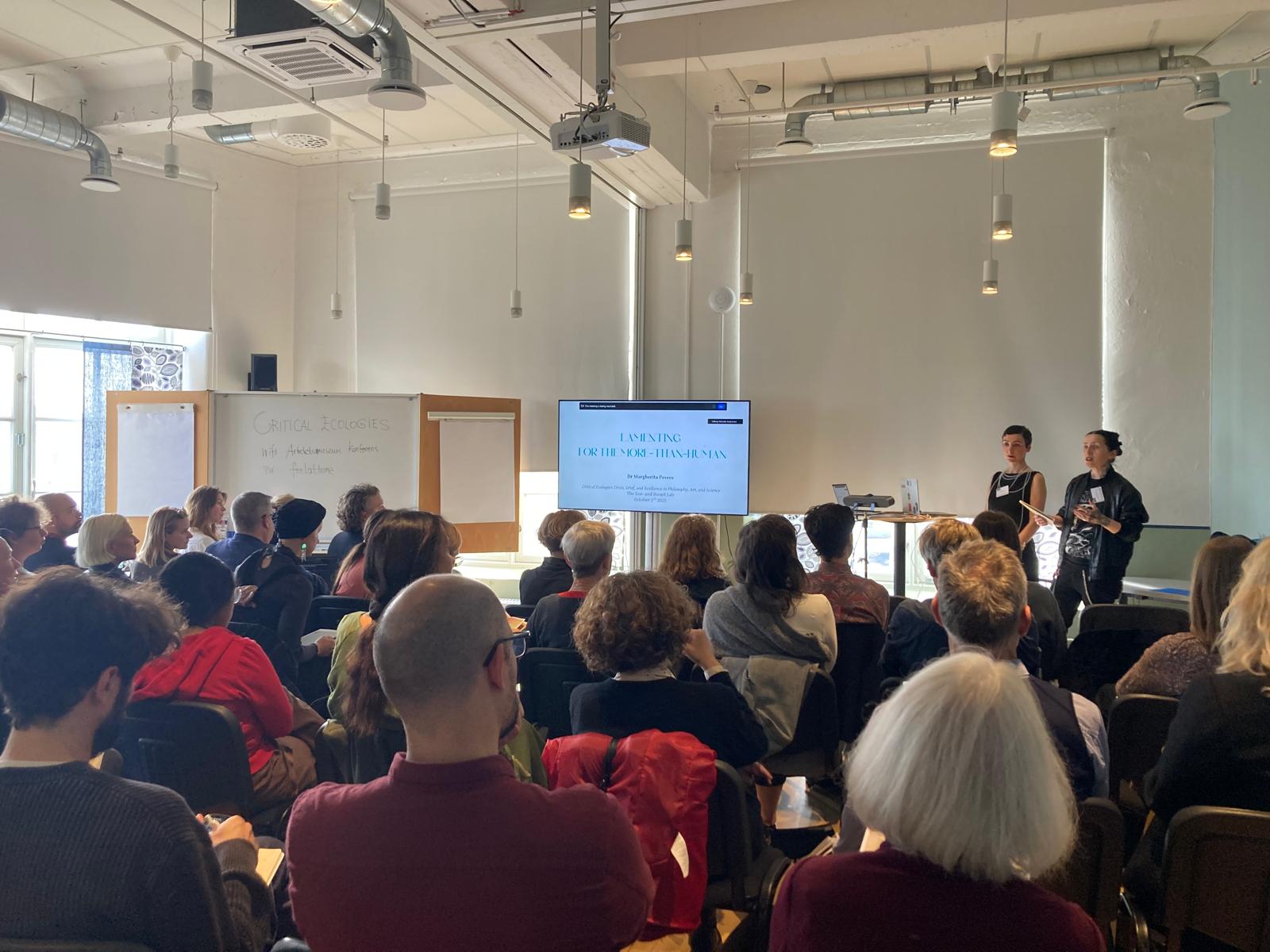
The first day of the event opened with the keynote lecture ‘Lamenting for More-than-human’ by Berlin-based independent artist and researcher Dr Margherita Pevere (IT/DE). There, Pevere zoomed in on the interweaving death ecologies central to wildfires, the ‘regimes’ of which have shaped whole ecosystems, organisms’ physiology, and species behaviour, all around the world. Currently, wildfire regimes are changing due to the interplay of global and local factors, like climate change, eco-disruption, or changed agricultural and land management practices. Wildfires are also central to Pevere’s installation and performance Lament (2024), which she presented in her talk. The artwork reflects on changing wildfire regimes and seeks new attunements with death and wounded ecologies. Its realisation had included fieldwork in wildfire-affected areas, transdiciplinary collaborations, community engagement, and biotechnological experimentation. The piece reacts to eco-disruption with reluctance and urgency. The first is the reluctance to accept environmental damage as unavoidable. The urgency is linked with the role of artists and intellectuals in society: to contribute to a vocabulary for changes yet to come. Consequently, in her lecture Pevere showed how art and research can offer a safe space to articulate things for which the right words do not yet exist. The lecture was followed by the keynote response by Prof. Margrit Shildrick (Stockholm University).
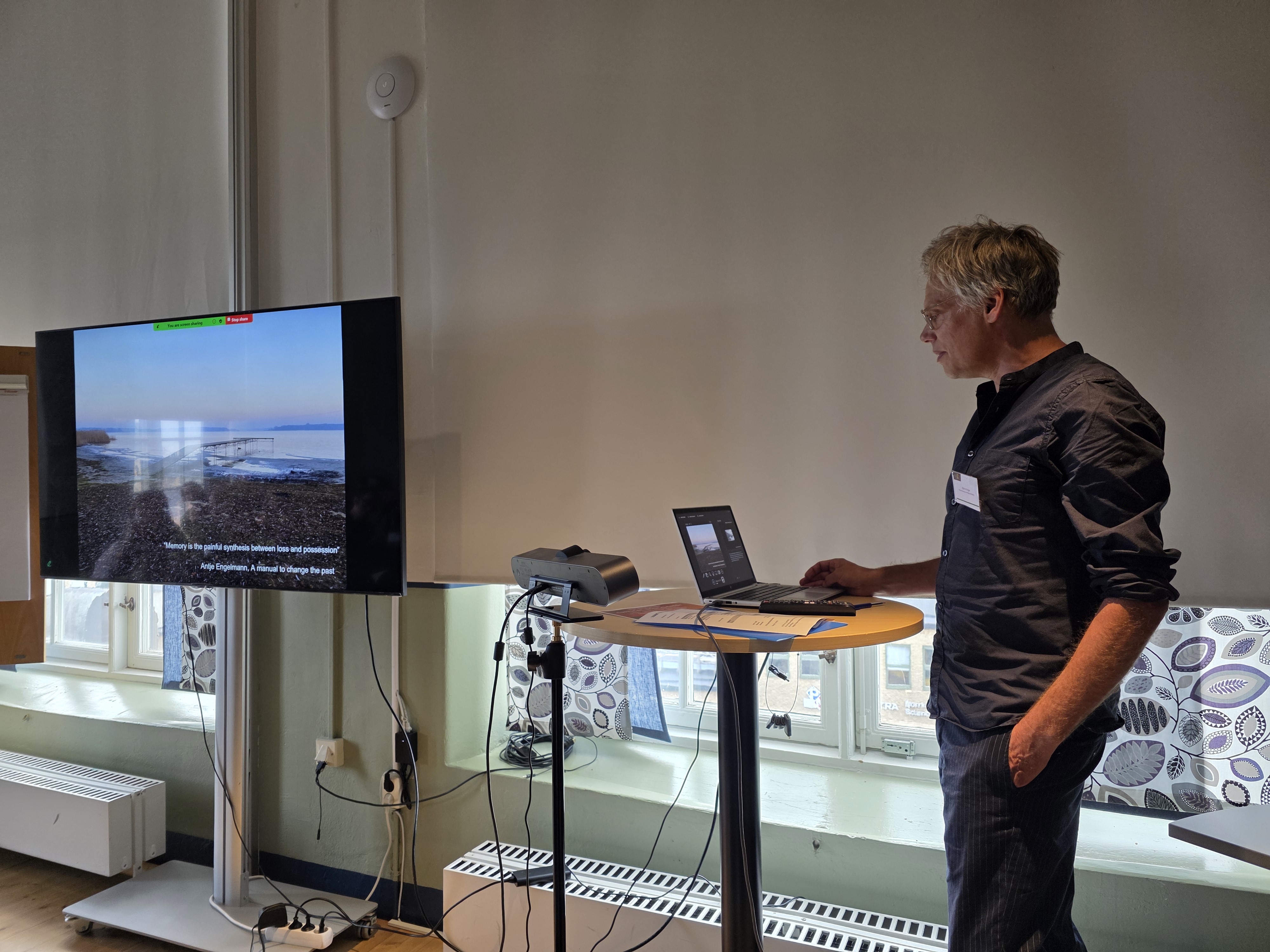
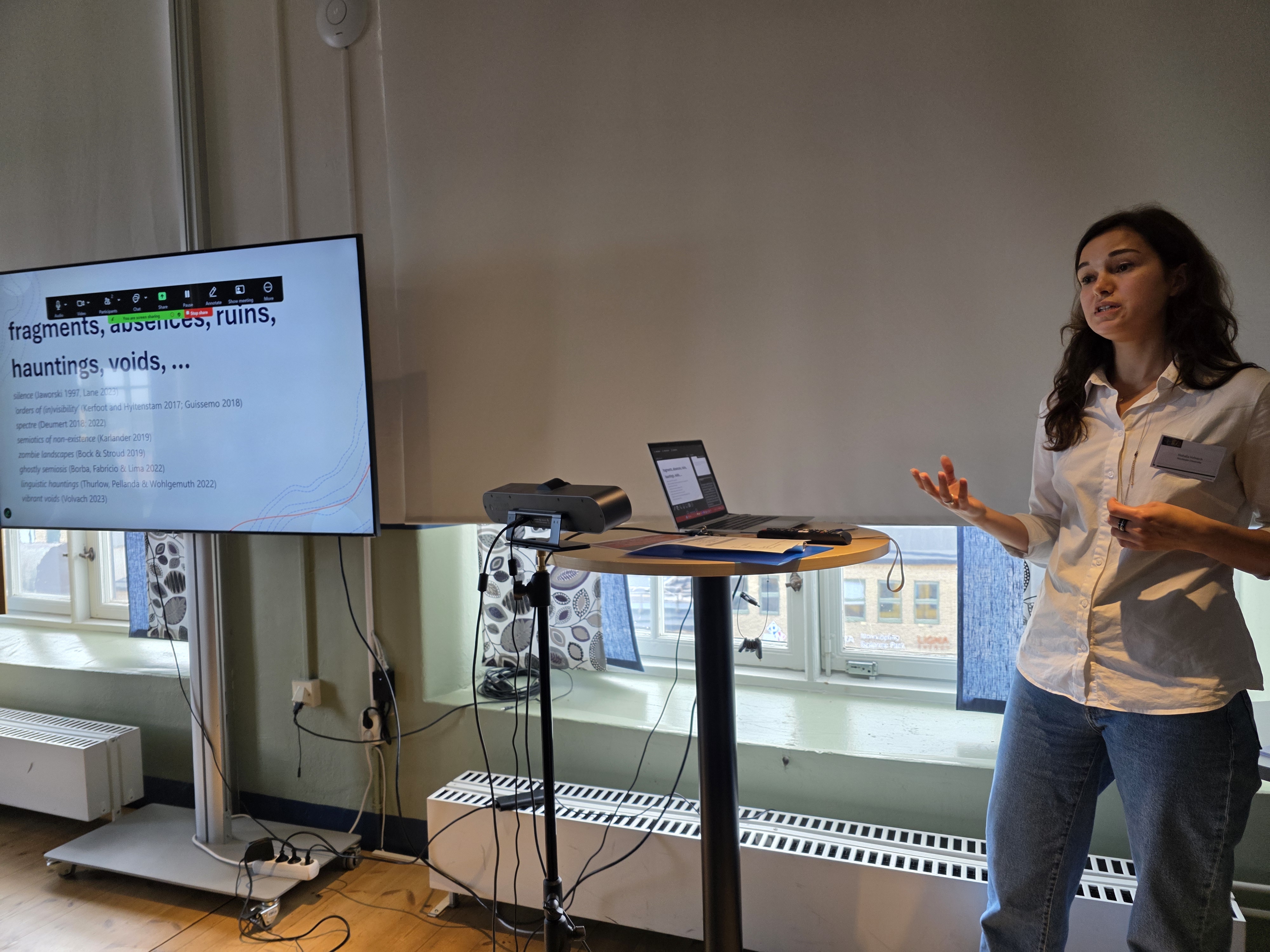
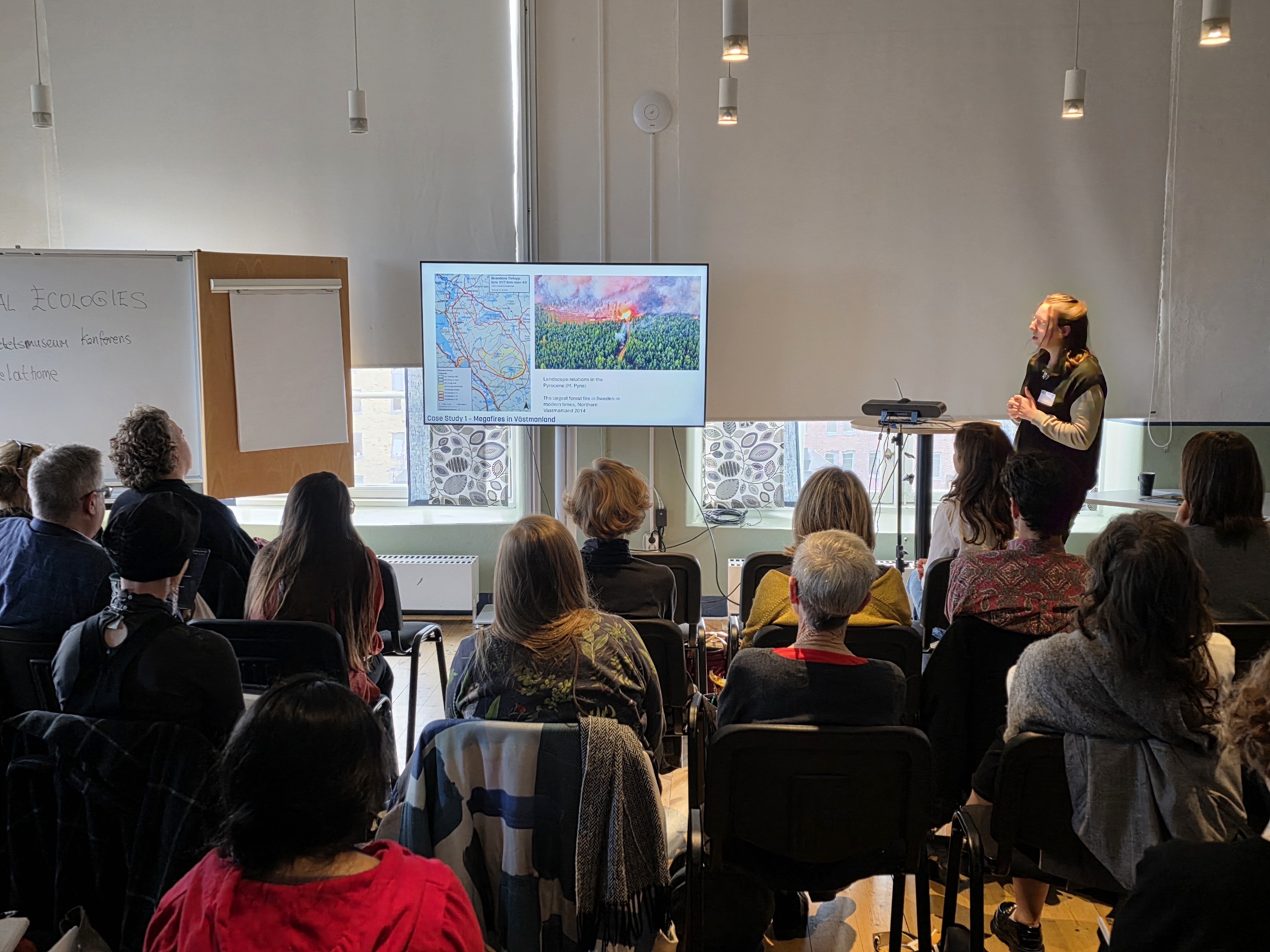
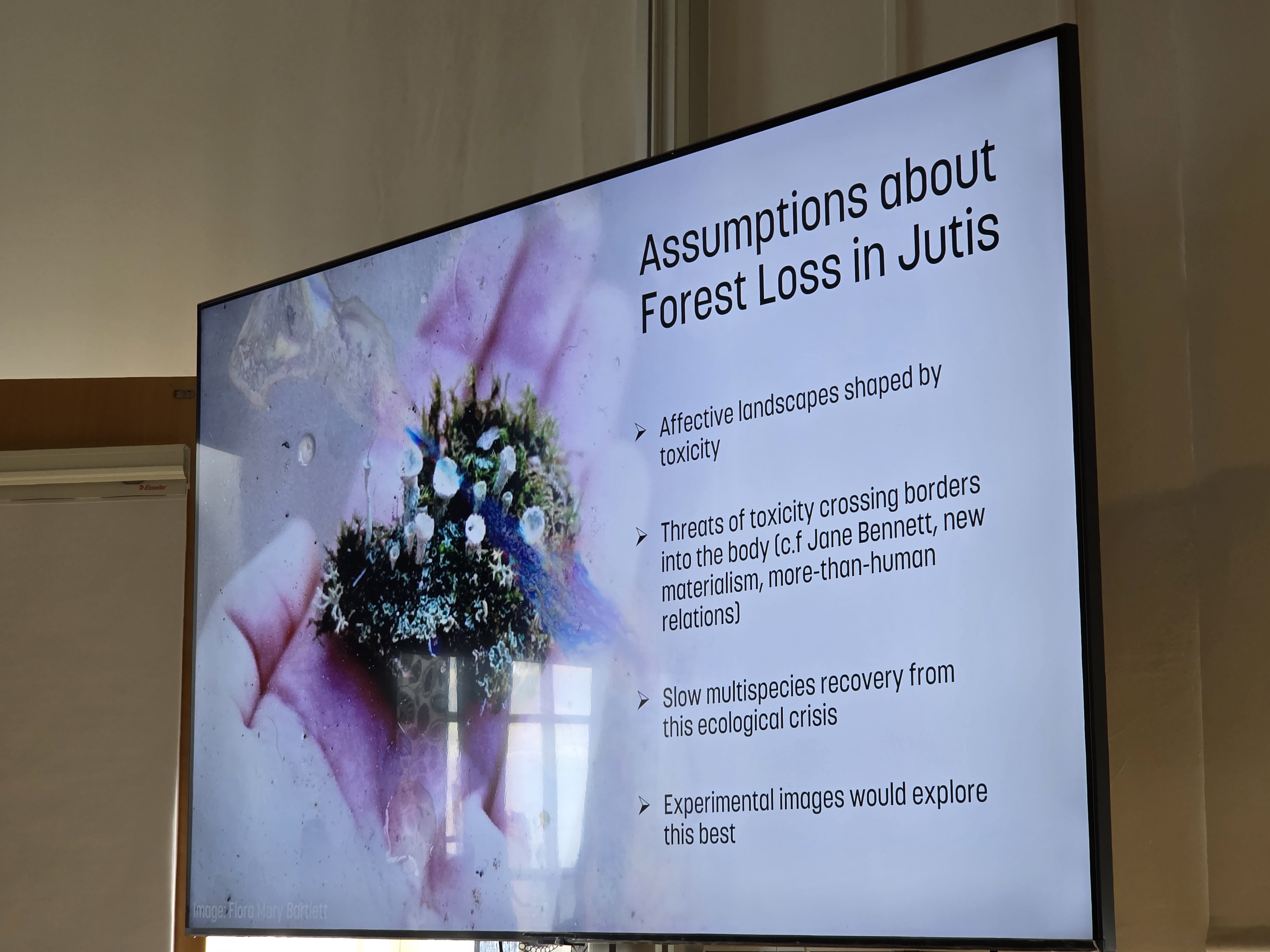
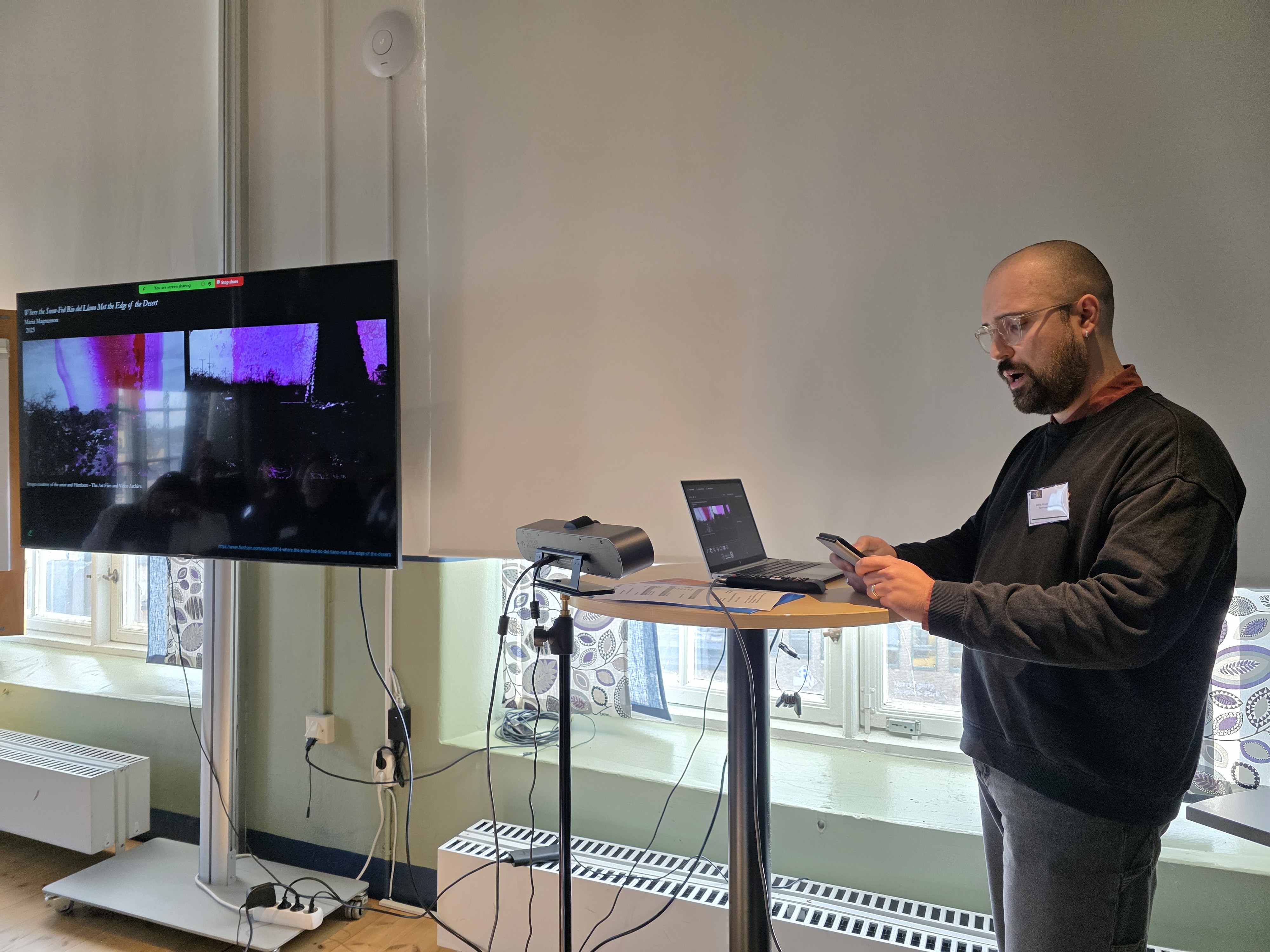
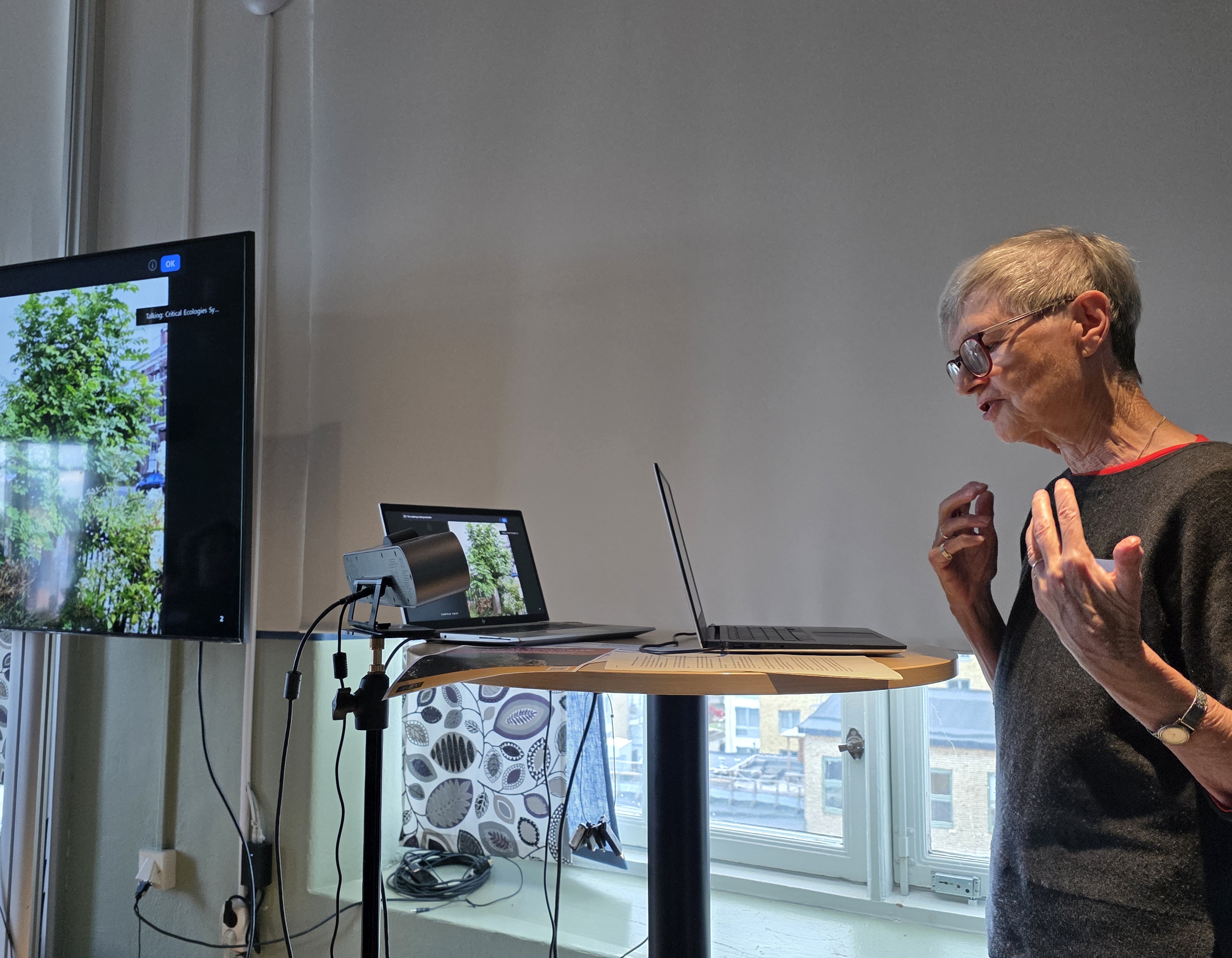
The following panel I and panel II took us on a rich, multilayered and multi-directional exploration. Taking on a transdisciplinary perspective and focusing on specific cases, palaeontologist and curator at the Finnish Museum of Natural History Dr Björn Kröger (University of Helsinki) discussed the epigenetic, ecological, cellular and collective memory of the studied lakes. Combining creative methods and more-than-human studies, multilingualism and migration scholar Dr Natalia Volvach (Stockholm University) explored the questions of the ‘sensing researcher’ in the pursuit of knowledge in a context where war-induced violence becomes intricately tied with human and more-than-human agencies. In the talk by anthropologists Dr Flora Mary Bartlett (LiU) and Prof. Lotta Gustafsson (Stockholm University/Nordiska Museet), we were introduced to a fascinating project Life with Forest Loss dealing with grief linked to landscapes altered through wildfires and toxic histories. Curator and PhD researcher David Revés (NOVA University, PT) discussed the curatorial project At the End of the World – set against the backdrop of Anthropocene extinctions – and his developing of a speculative methodology anchored in instability, rupture, collapse, and material decay as constitutive elements of exhibition-making.
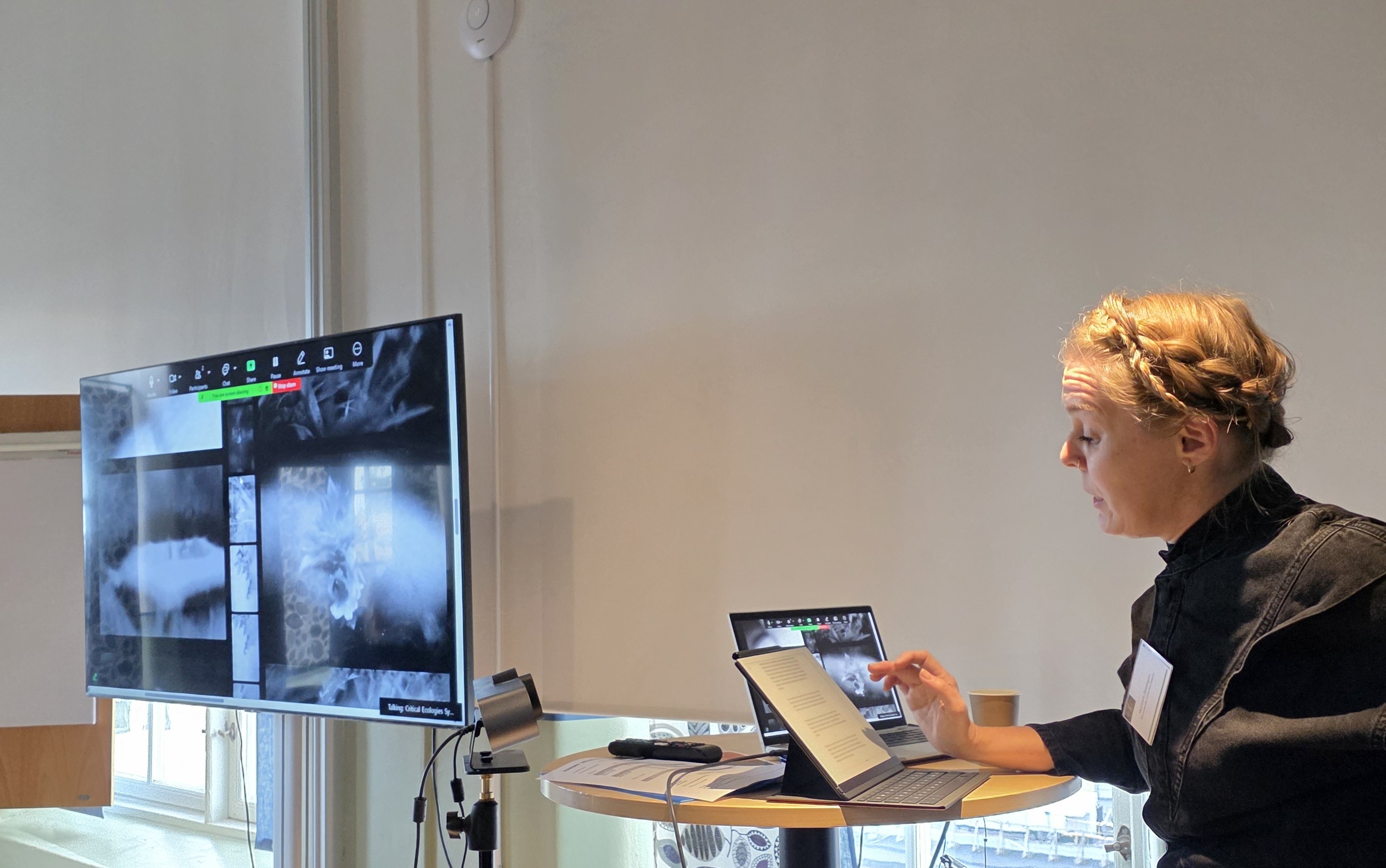
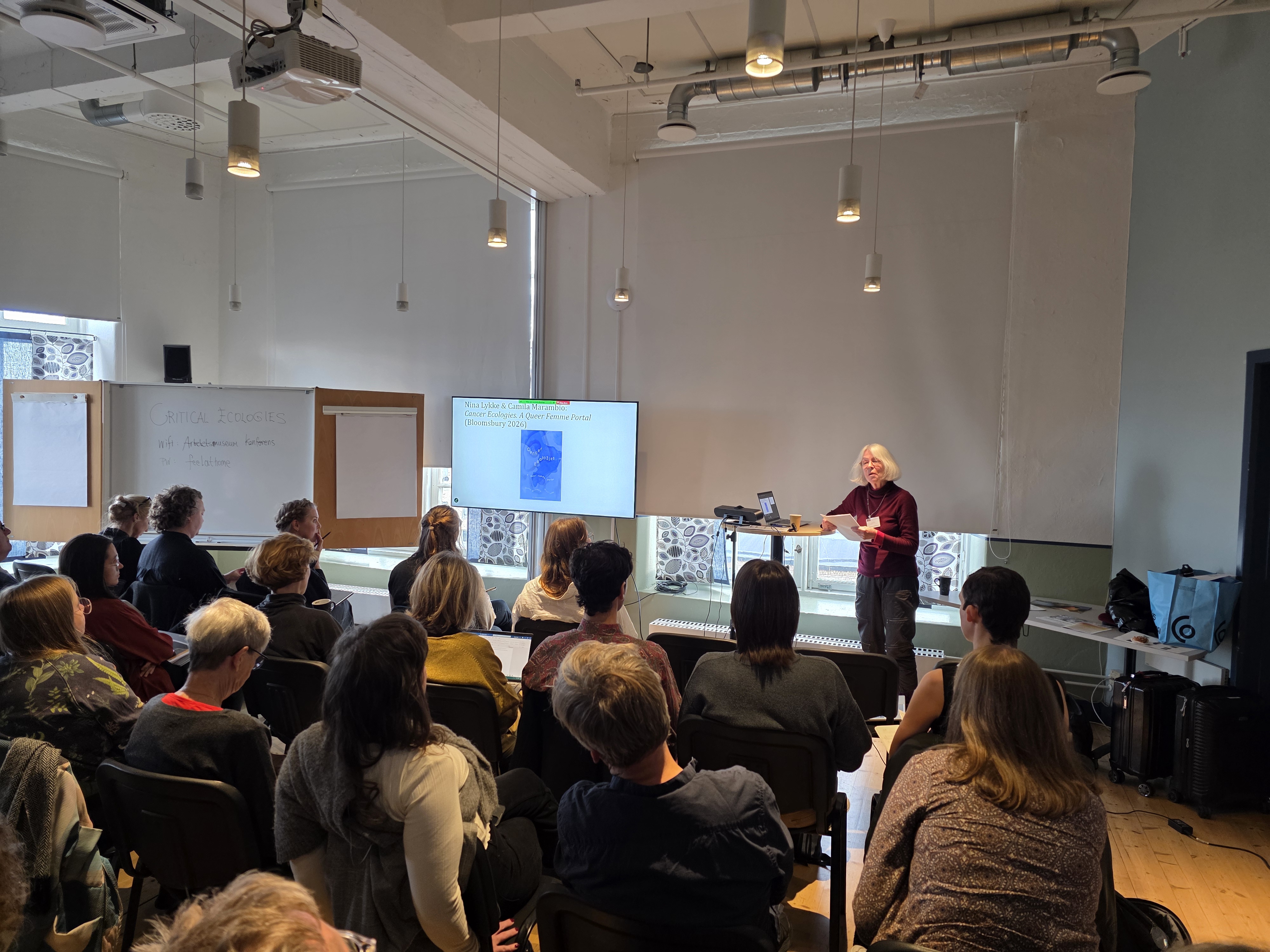
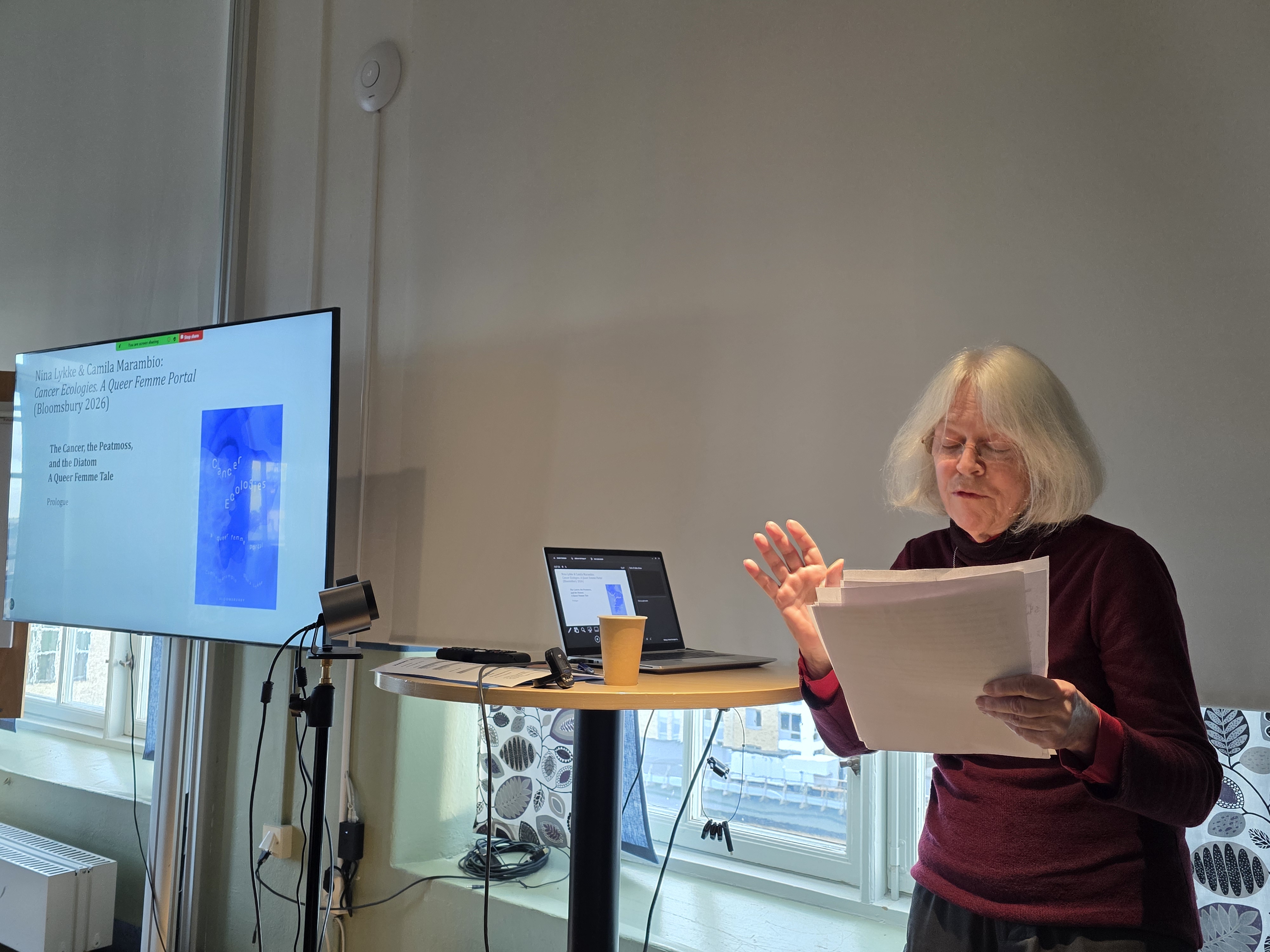
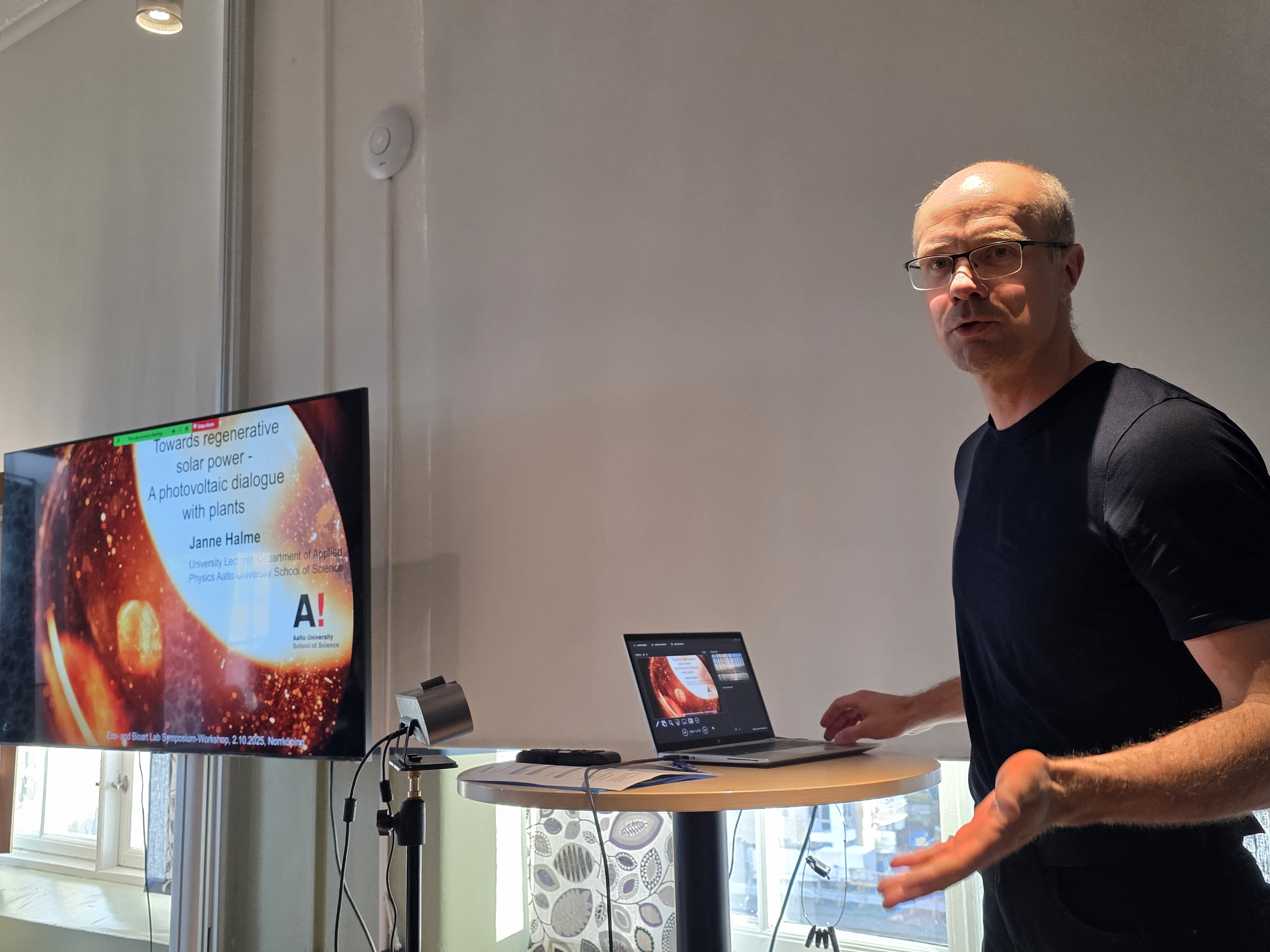
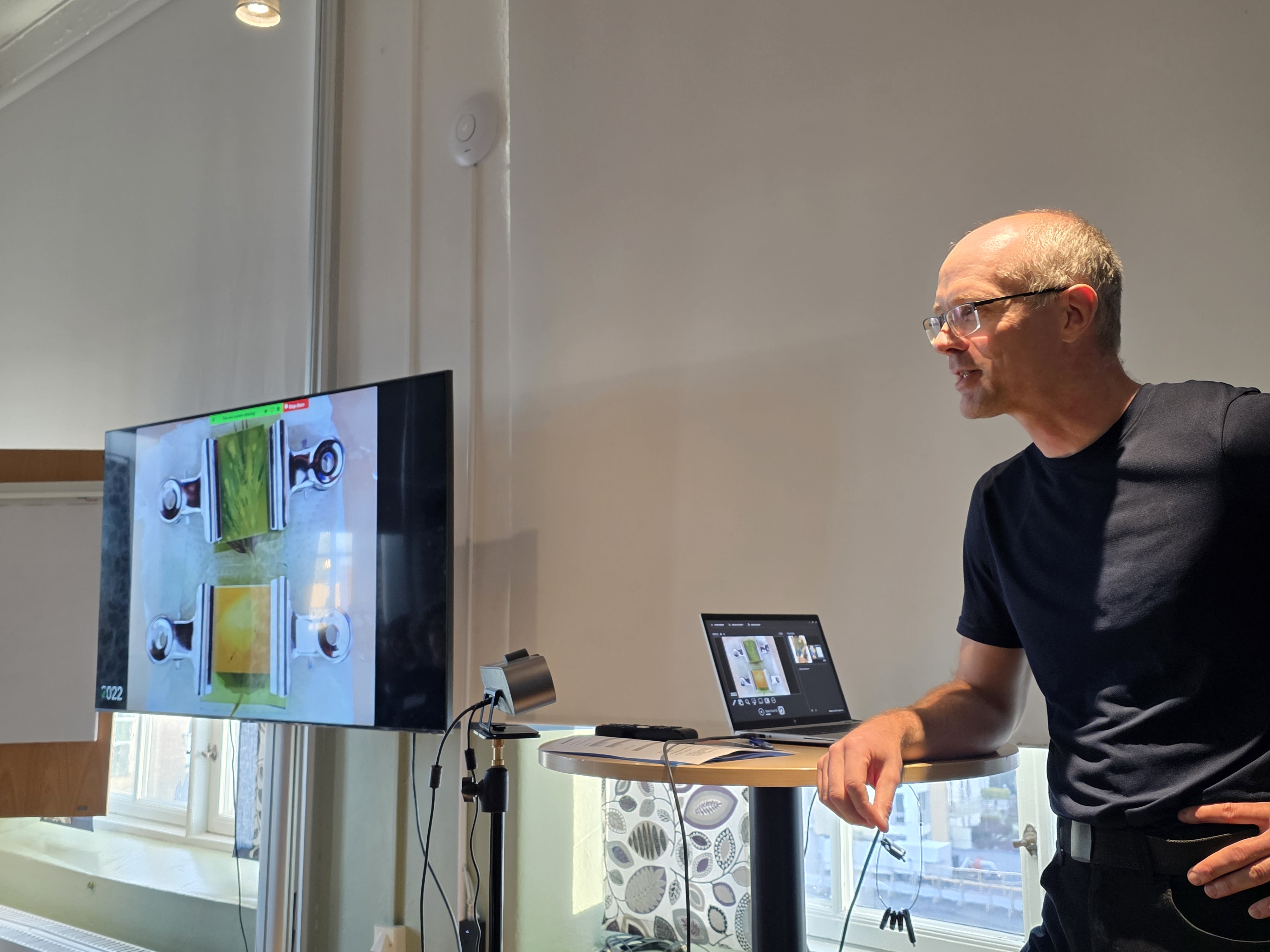
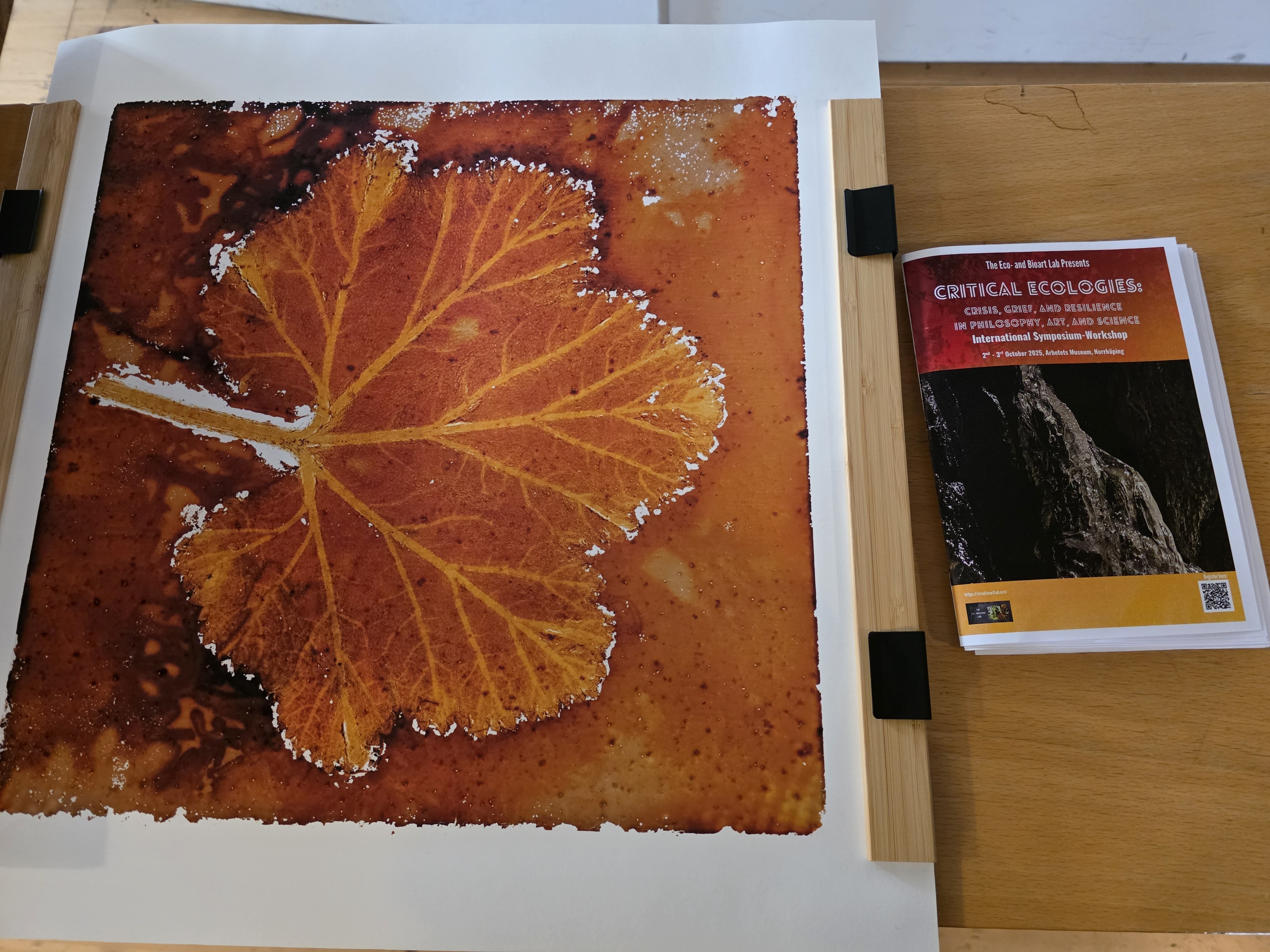
In her performance lecture Ögontröst — a vision in ruins, artist and PhD researcher Rut Karin Zettergren (Uniarts Helsinki, FI) presented her artwork Ögontröst, which repurposes the technology of Infrared (IR) vision through speculative fiction and feminist techno-critical approaches, exploring how it might be redirected toward sensibilities of care. Prof. Em. Nina Lykke (LiU / Aarhus University, DK) also employed creative methods in order to explore whether it is possible to build resilience through changed approaches to apparently ‘natural’ enemies such as cancer, which could also be understood as a symptom of Anthropocene necropowers. In his performative talk, physicist and artist Dr Janne Halme (Aalto University, FI) presented his artistic practice in which he works with dye-sensitised solar cells made from pressed plants collected at existing or planned solar power plant sites. The audience had an opportunity to experience Photovoltarium, Halme’s evolving art project which explores and prototypes nature-positive, inclusive approaches to solar development.
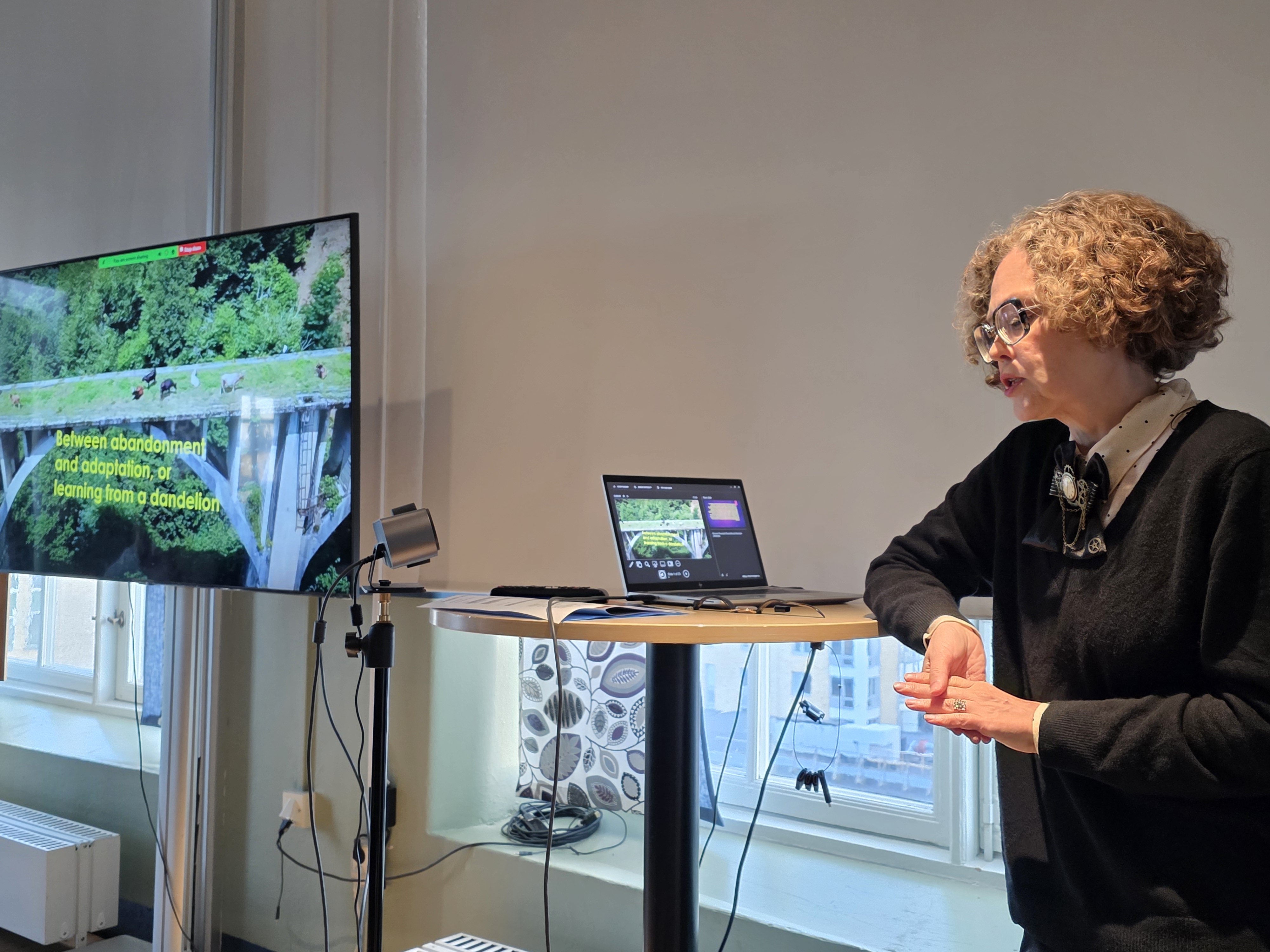
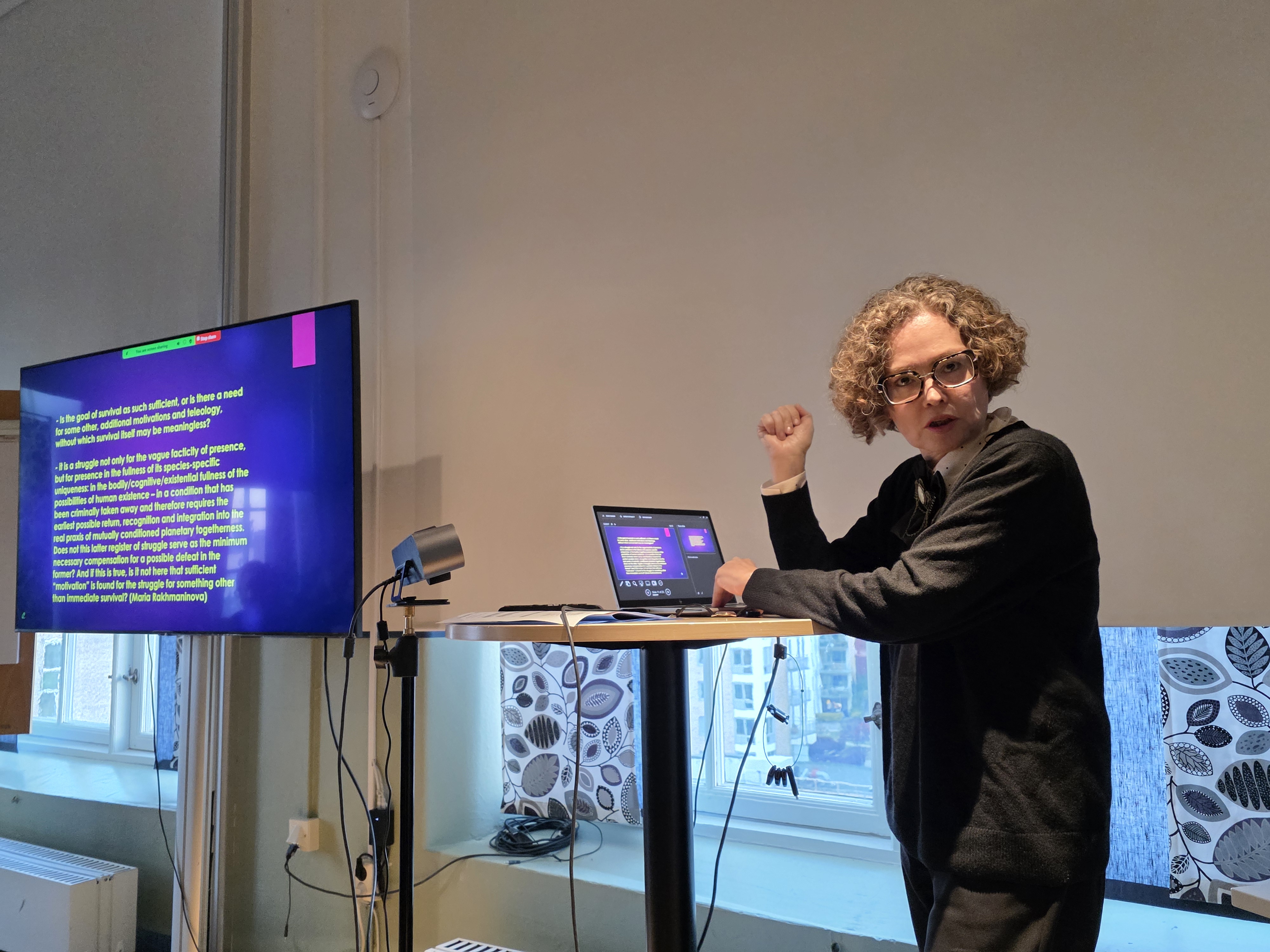
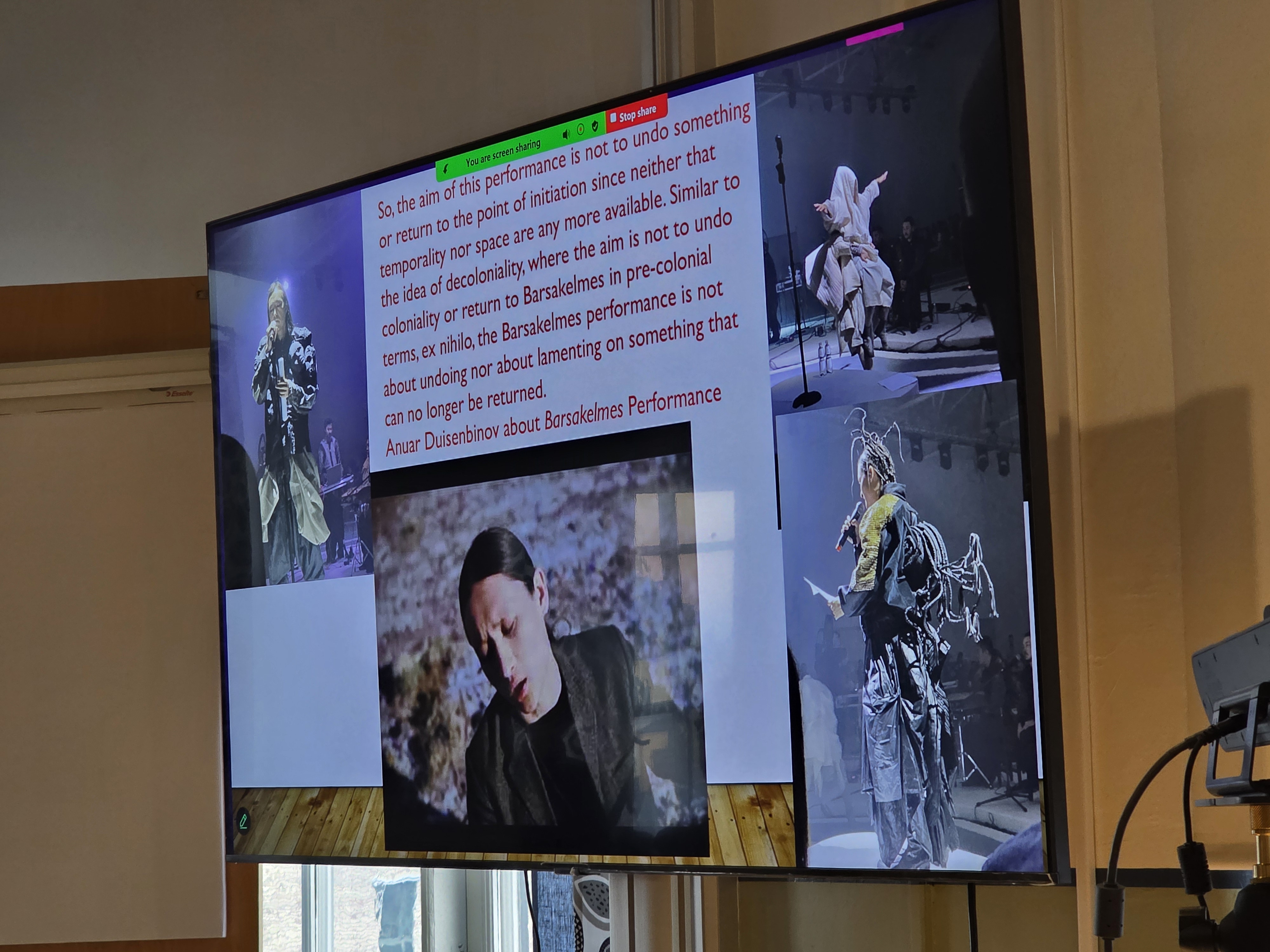
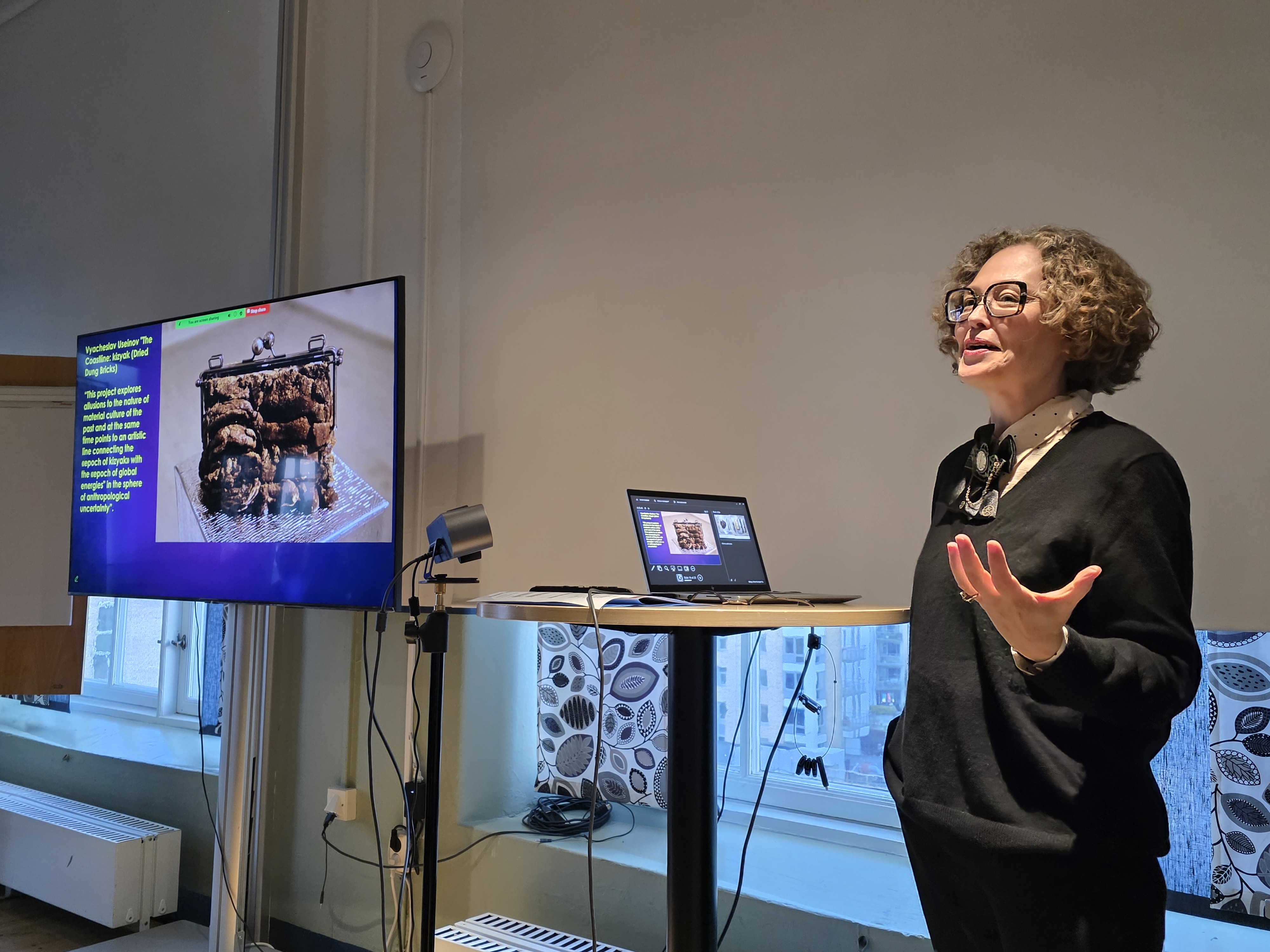
The day was closed with the keynote lecture ‘Between Abandonment and Adaptation, or Learning from a Dandelion’ by Prof. Madina Tlostanova (LiU). The starting point for this deeply ethical intervention was a world where the creation of ‘dispensable’ lives, both human and nonhuman, is no longer a transitory crisis, but a default feature. These beings have already been abandoned by the decision-making techno-driven accelerationist elites. The acceleration is no longer about progress or happy future, but rather about bringing the end of the world closer and completing the modern/colonial cycle of alienation from the world and the creation of an artificial environment for the chosen transhumans, Tlostanova argued. The difference between the already abandoned and those who for a while are distracted with populist slogans, xenophobia or nationalism, is a matter of time and more importantly, a matter of awareness and political and ethical choice, of the position one selects. Drawing on critical design scholarship, she argued for ‘the world of retention’ (T. Fry), referring to communities seeking to preserve in the coming decades what can still be saved in the world that is disappearing before our eyes (in terms of both endangered species or reservoirs of clean water AND the disappearing fabrics of human and interspecies relations, solidarity and empathy). At the end of this rich and powerful lecture, we were still left with a passionate endeavour to hope and care. The keynote response was provided by Dr Marietta Radomska (LiU).
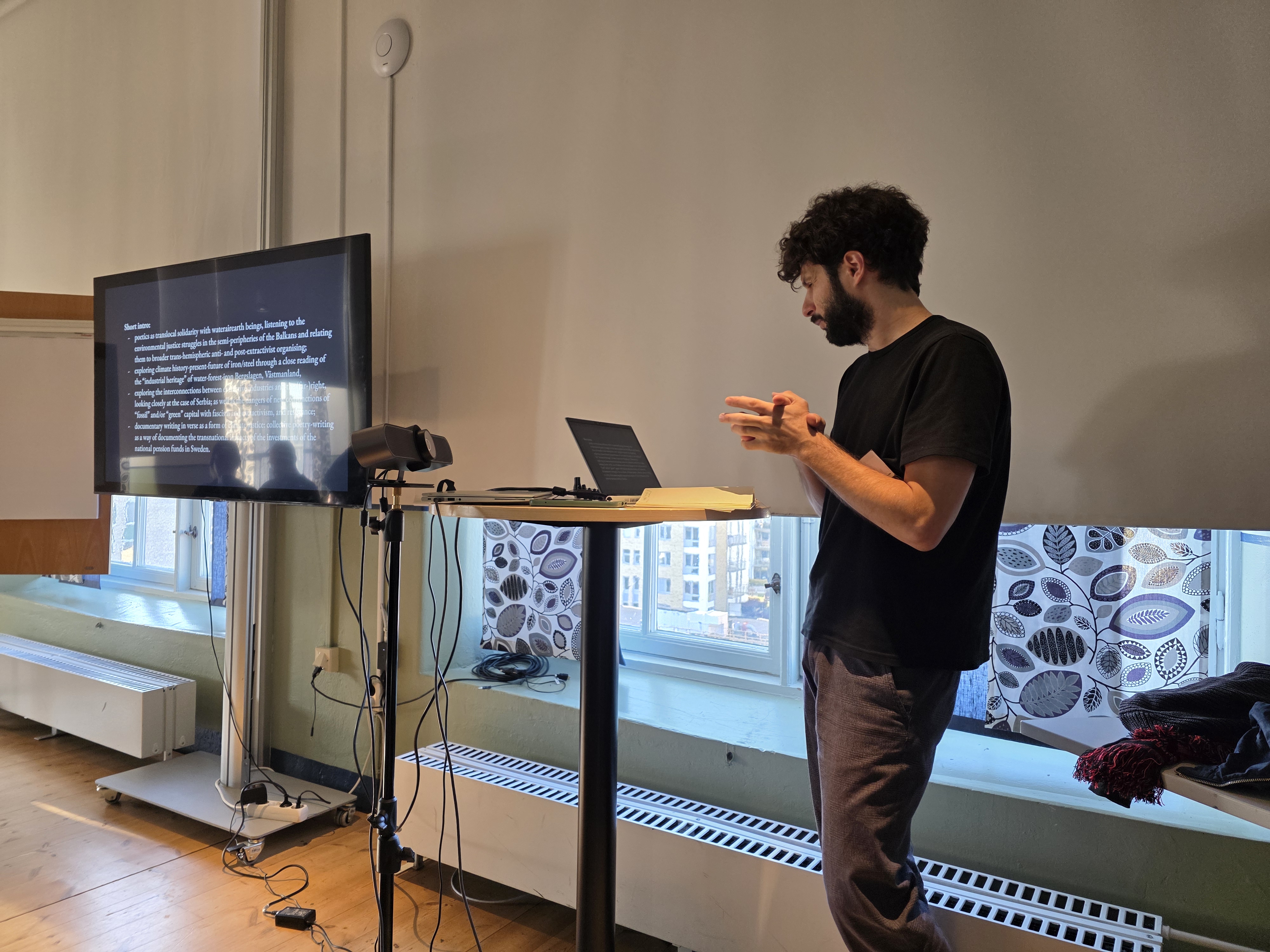
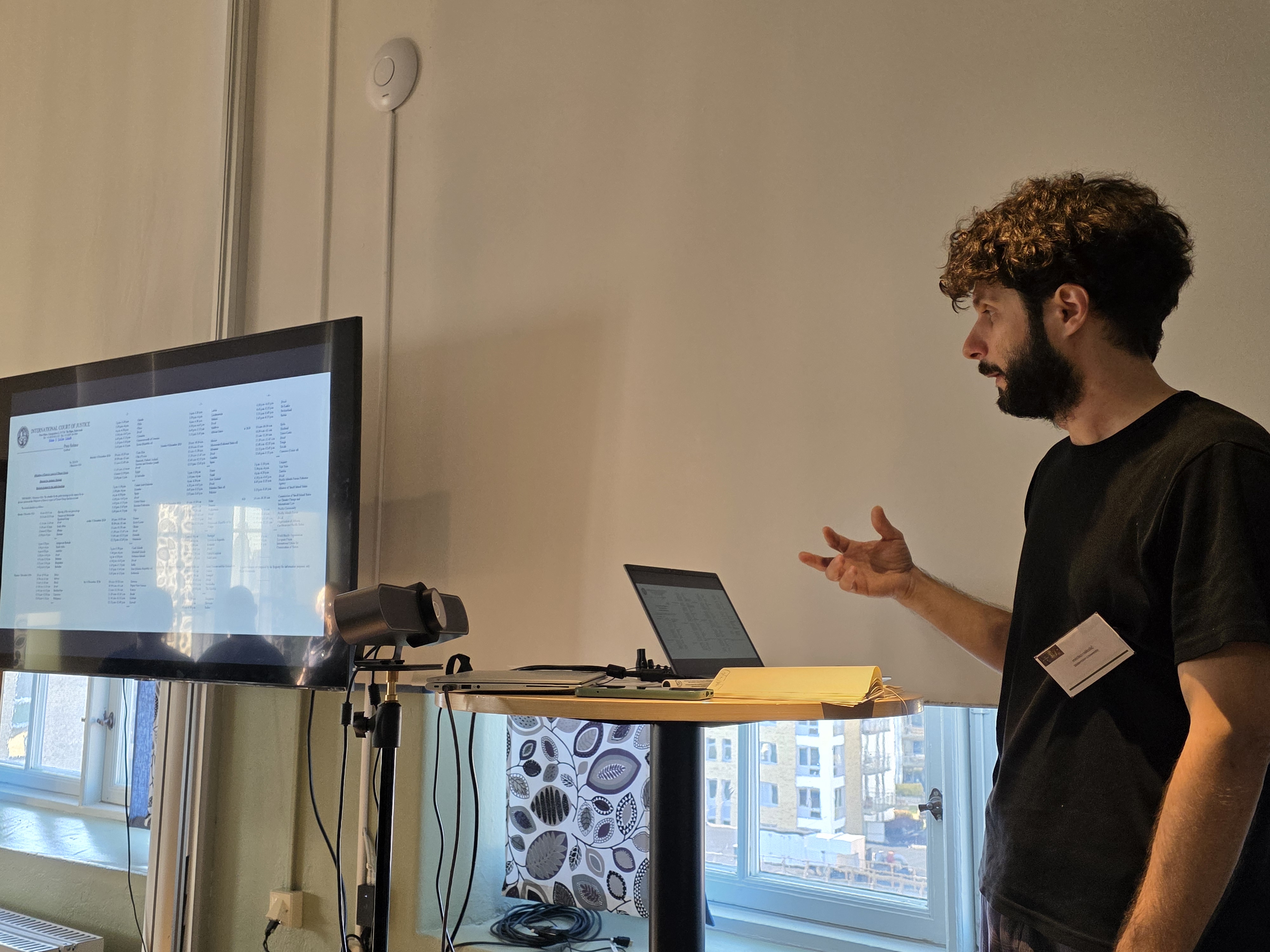
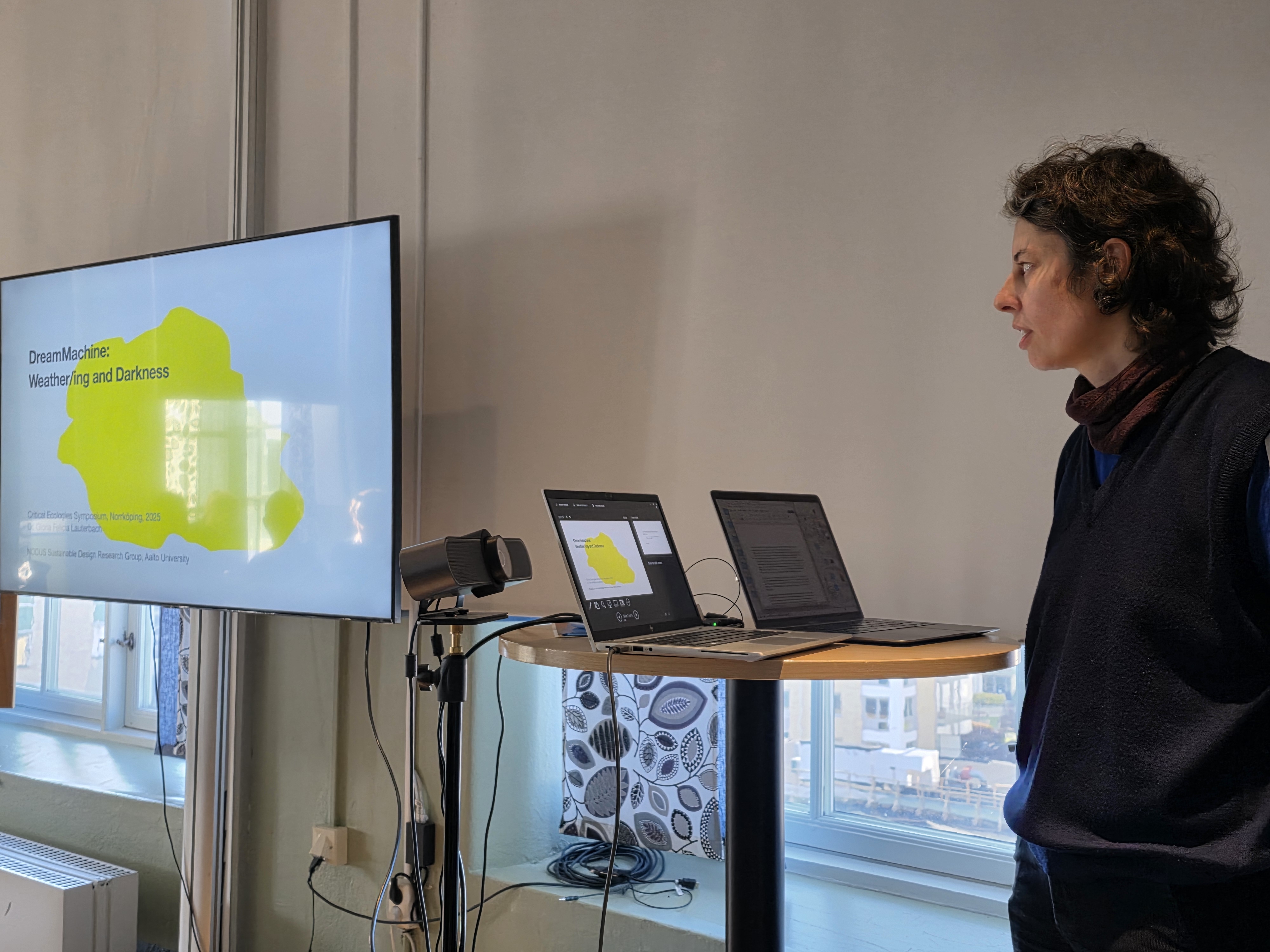
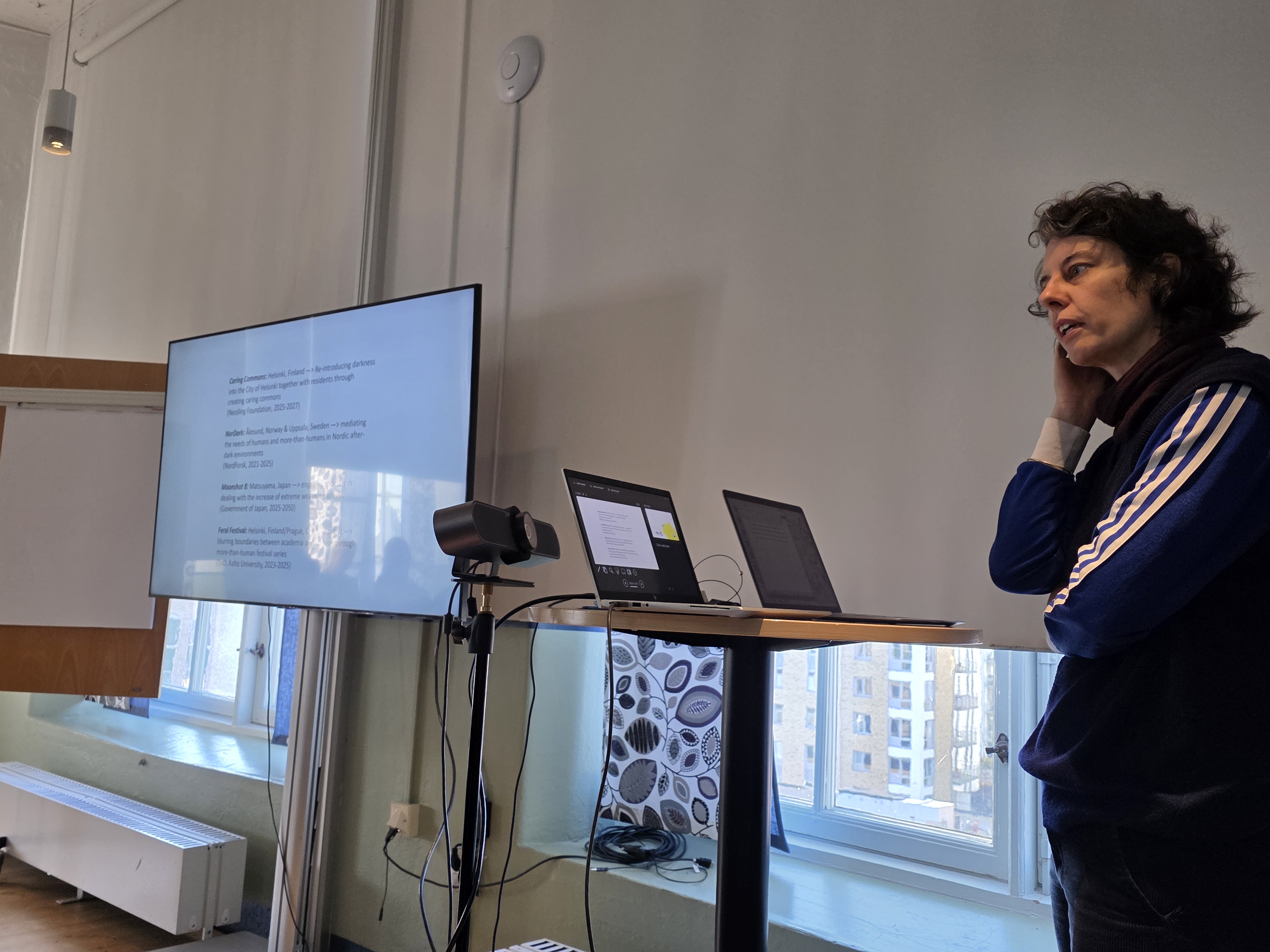
The second day of the symposium opened with two creative interventions. Firstly, artistic and environmental humanities researcher dr mirko nikolic (Södertörn University) invited the audience to a participatory workshop involving the use of erasure poetry and creative methods with the aim to deepen the understanding of climate and environmental impacts, as well as agential potential of public/collective finance in the global north/Sweden. Design and artistic researcher Dr Glora Lauterbach (Aalto University, FI) offered a performance lecture which focused on how an increasingly unstable future might affect our dreams and visions at night. She posed questions such as: do we dream at locations with extreme weather more intensely, about ways out or possibilities to adapt? How does environmental grief appear in the night and how can it be talked about in the day without tying dream worlds down?
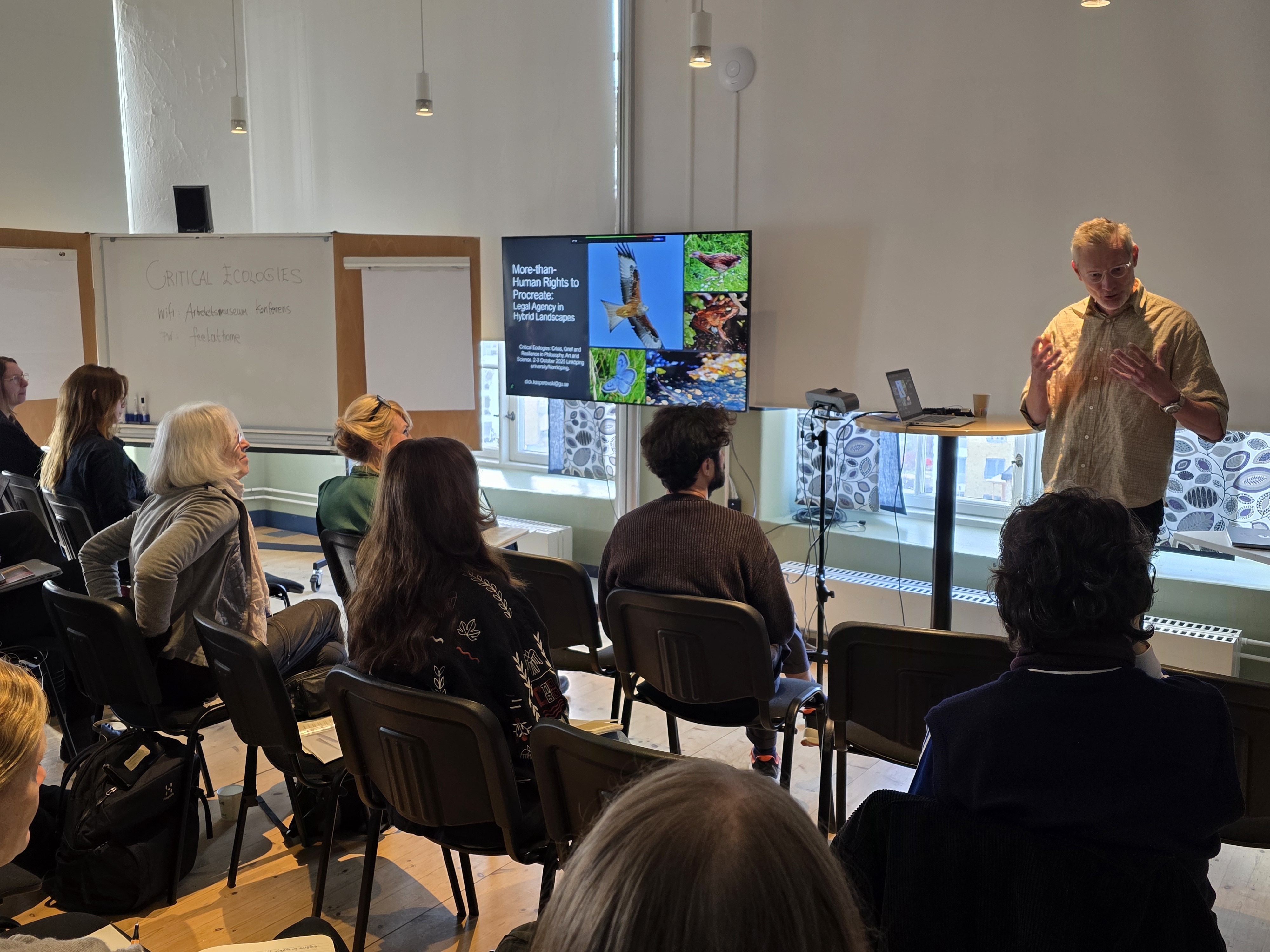
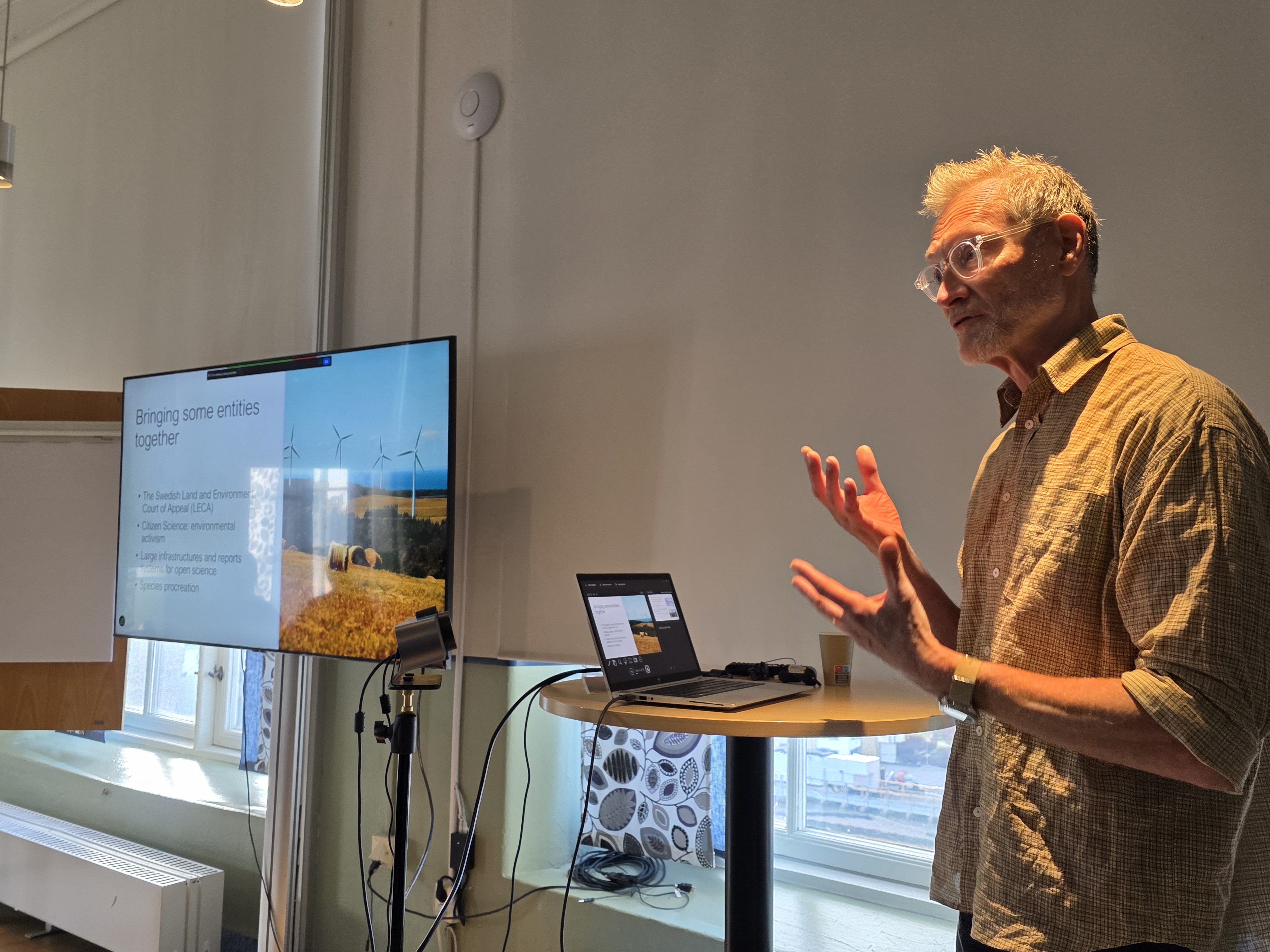
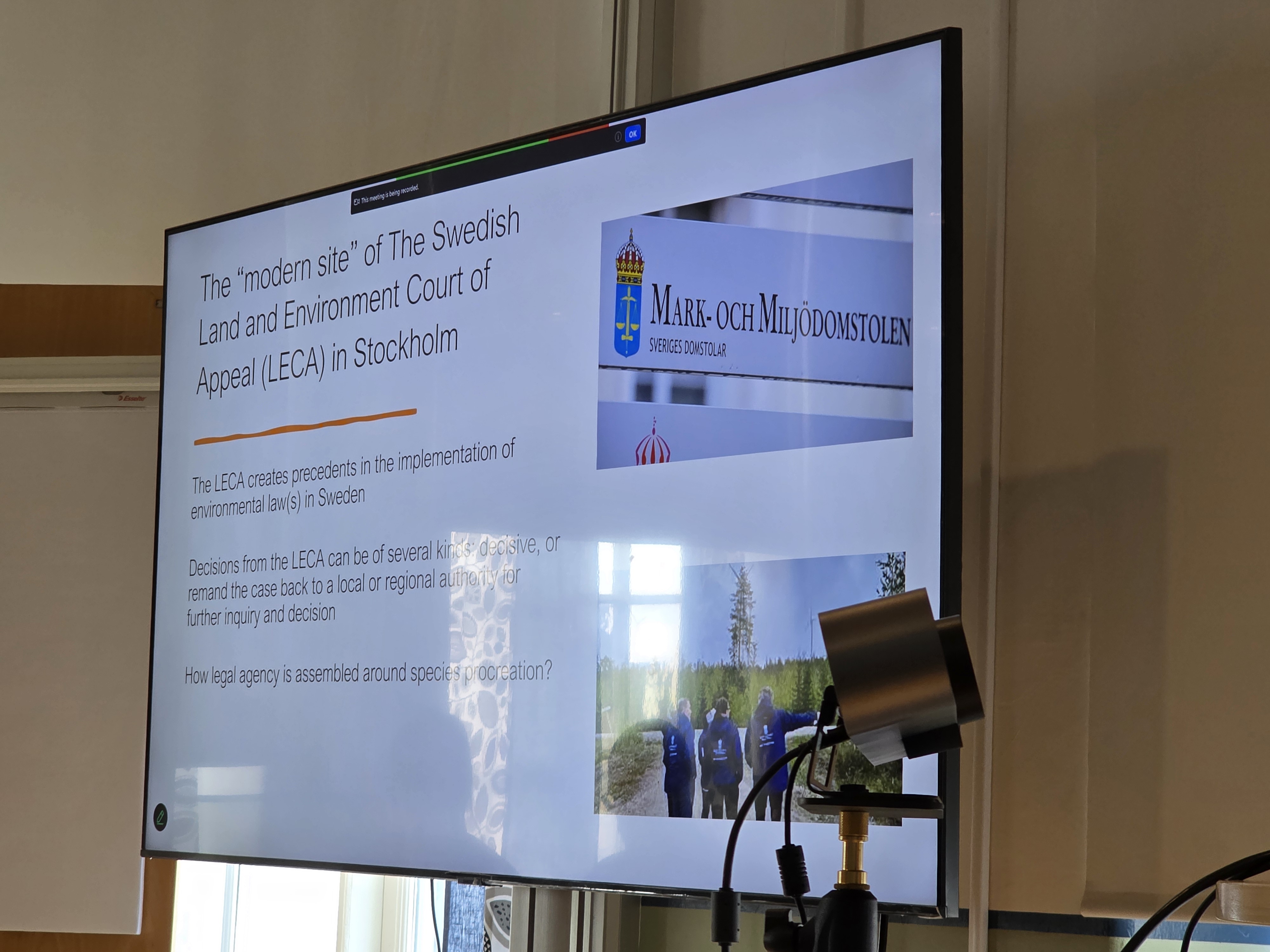
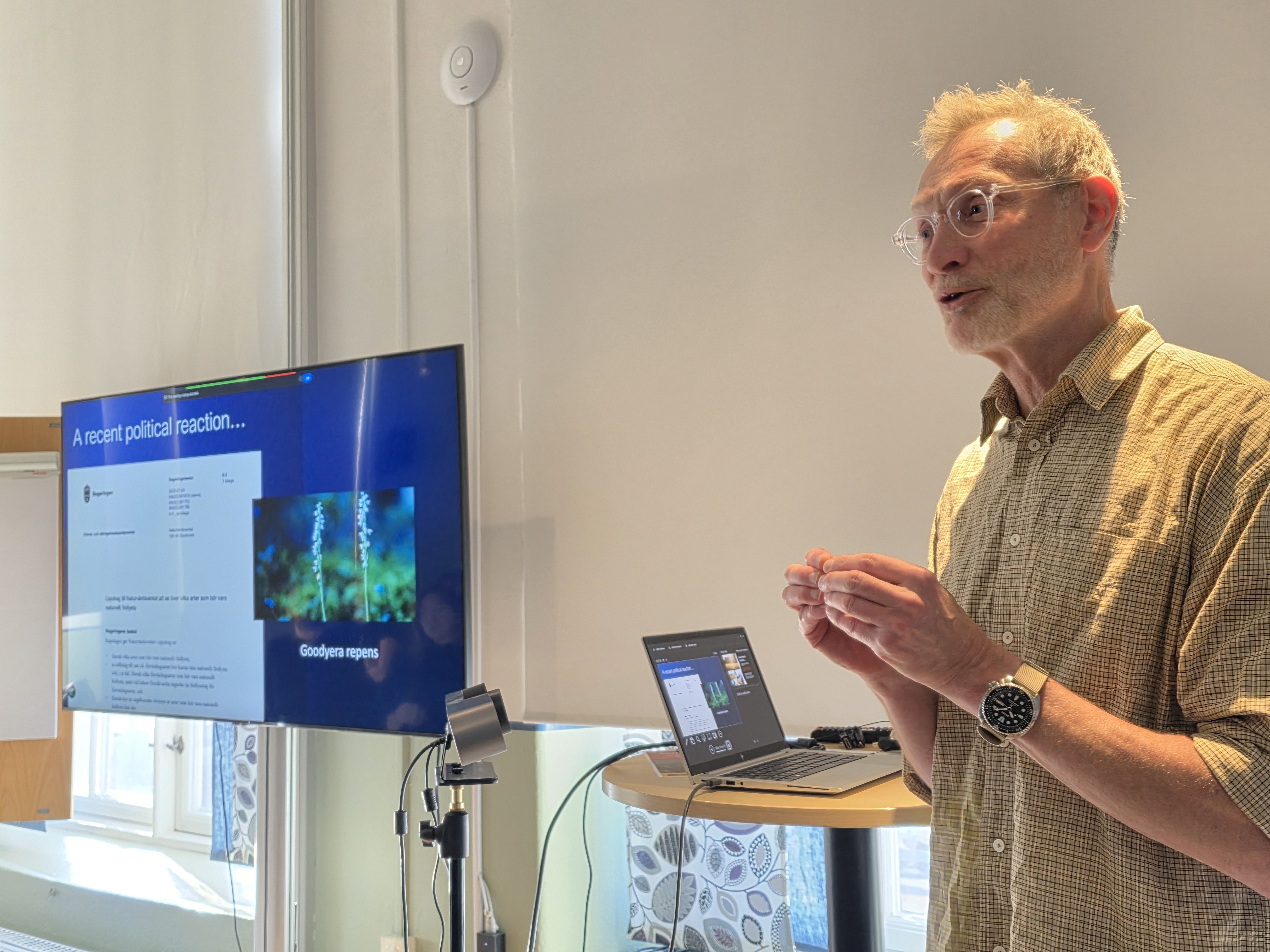
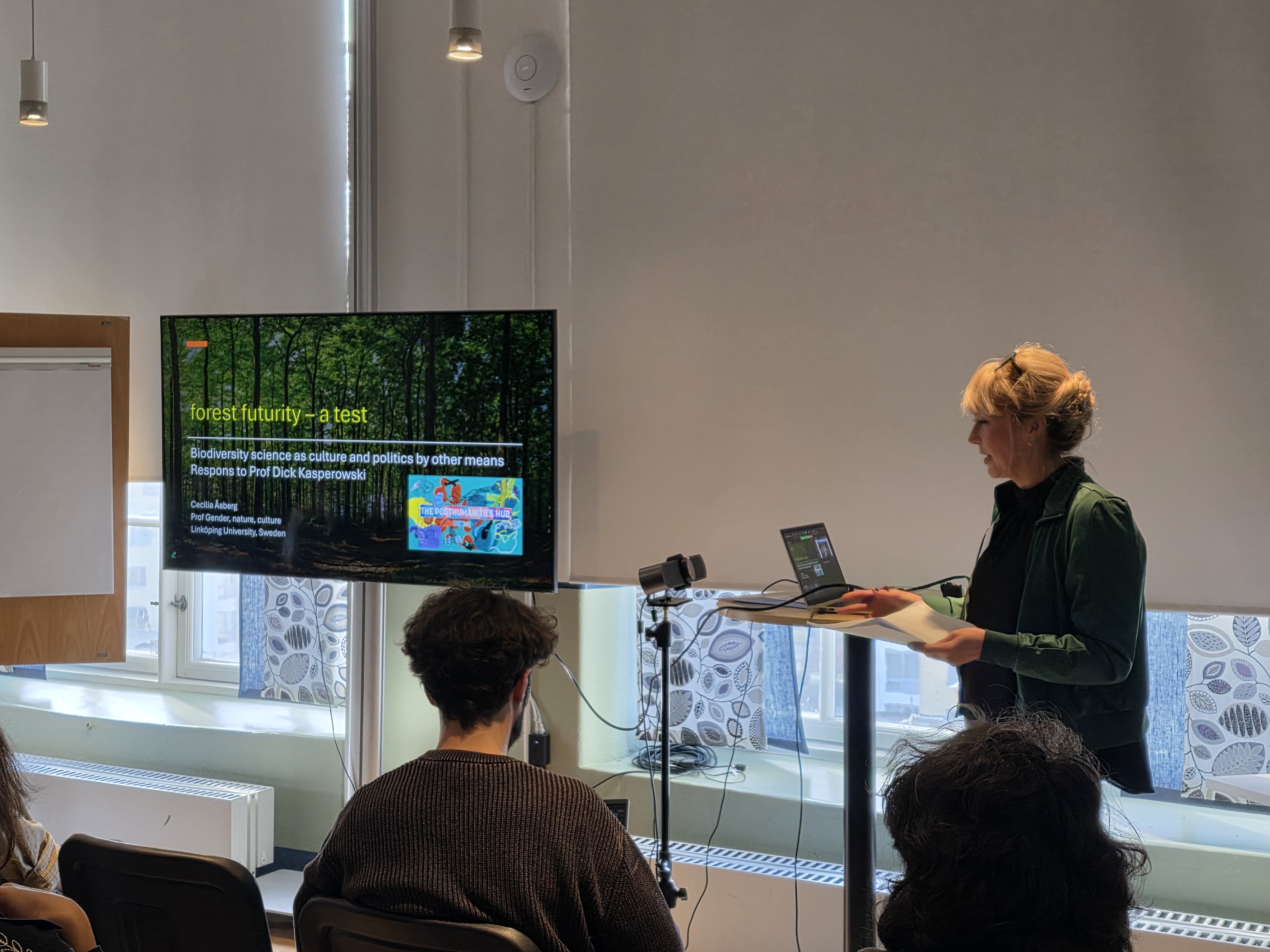
The third keynote lecture entitled ‘More-than-Human Rights to Procreate: Legal Agency in Hybrid Landscapes’ was given by Prof. Dick Kasperowski (University of Gothenburg). The talk focused on more-than-human rights to procreate within the context of environmental law, specifically examining how species’ procreation is legally framed and protected in hybrid landscapes. Drawing on selected cases and employing a posthuman theoretical lens, the lecture focused on Swedish environmental legal practices, where citizen science is instrumental in gathering species data that influences court decisions. The talk challenged traditional anthropocentric legal frameworks, exploring the recognition of species’ right to procreate as fundamental to their survival and biodiversity conservation. Simultaneously, it also highlighted an evolving role of environmental courts, particularly the Swedish Land and Environment Court of Appeal, in integrating citizen-reported species observations into legal processes. The keynote response was provided by Prof. Cecilia Åsberg (LiU).
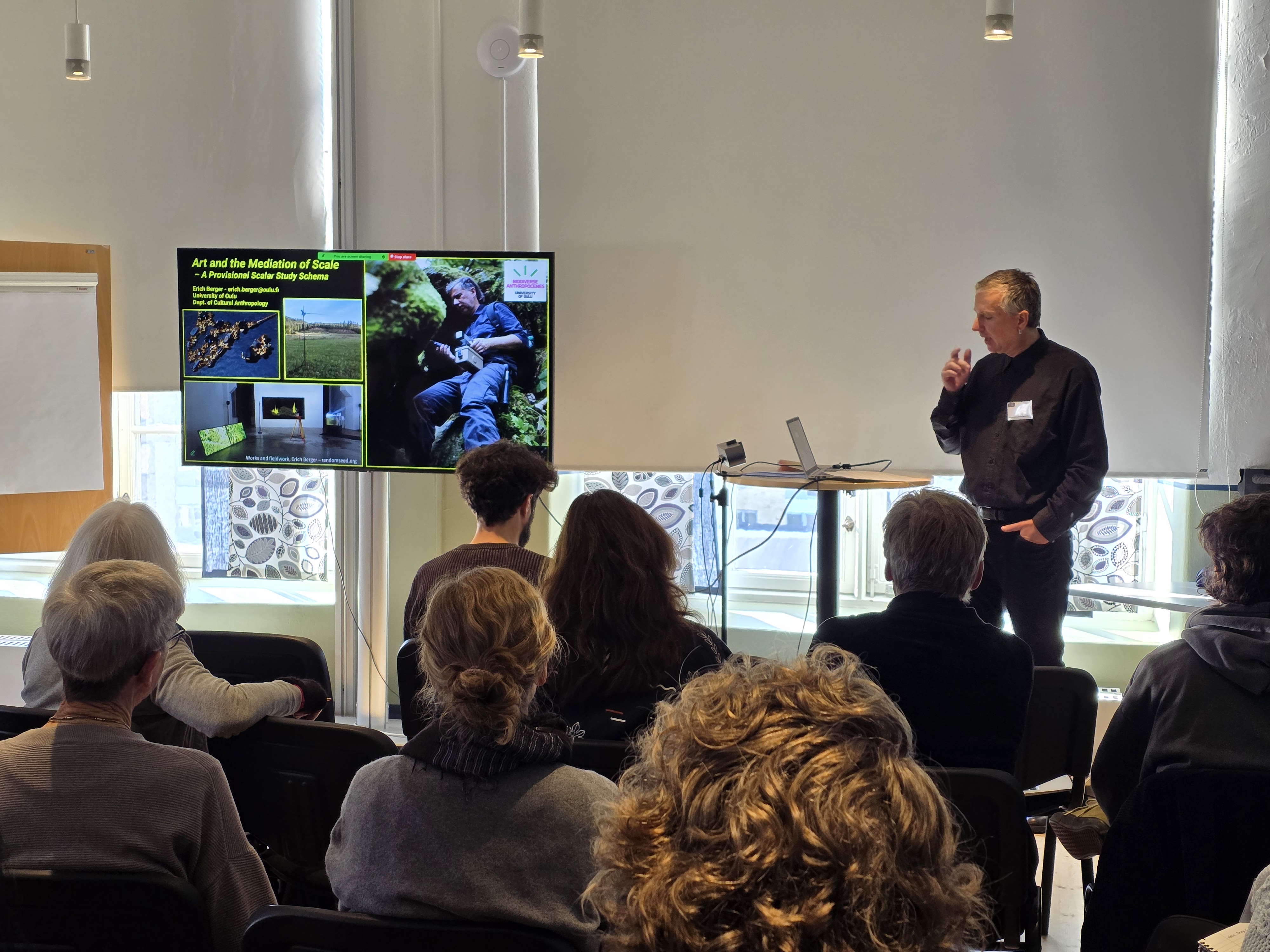
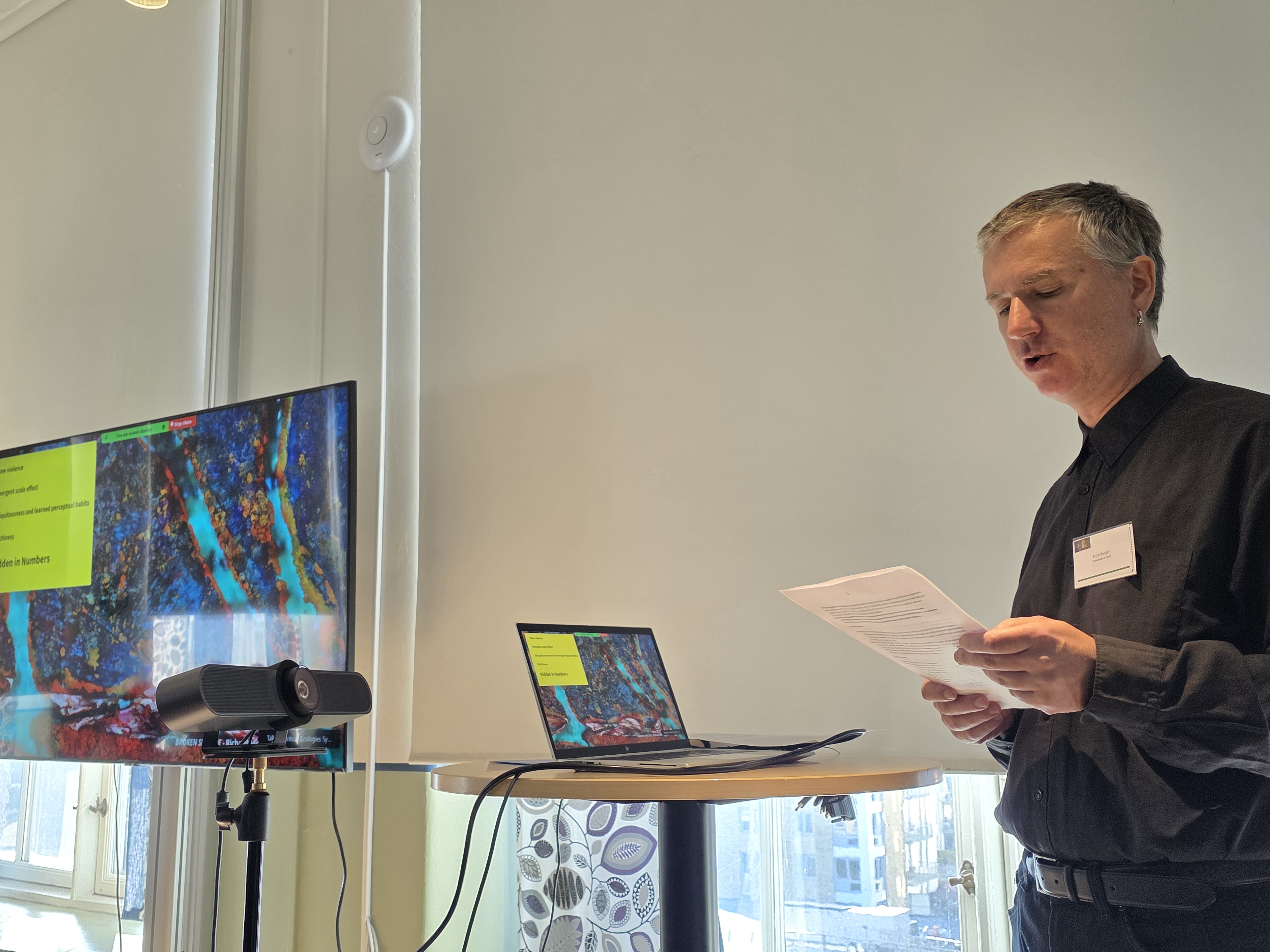
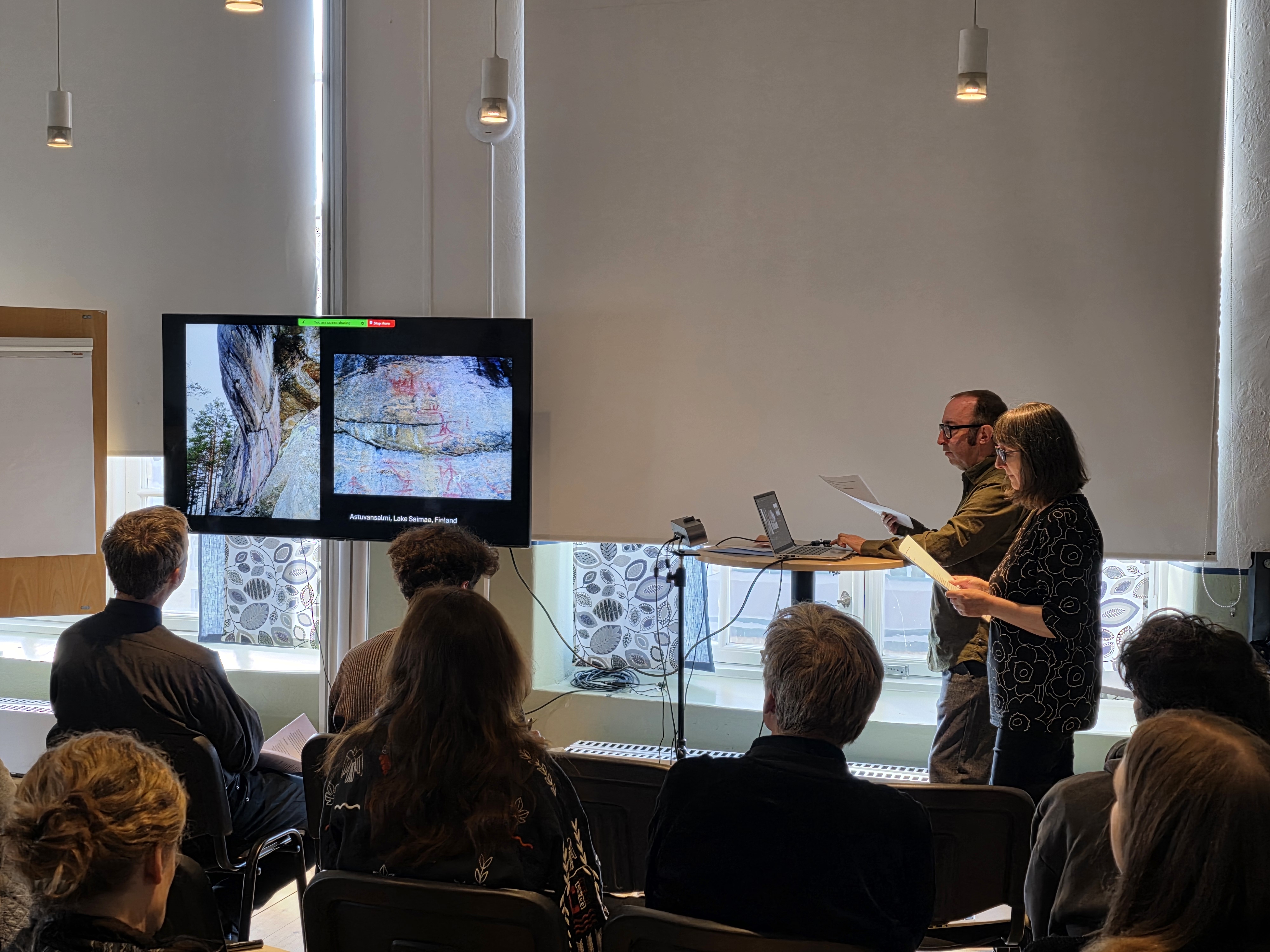
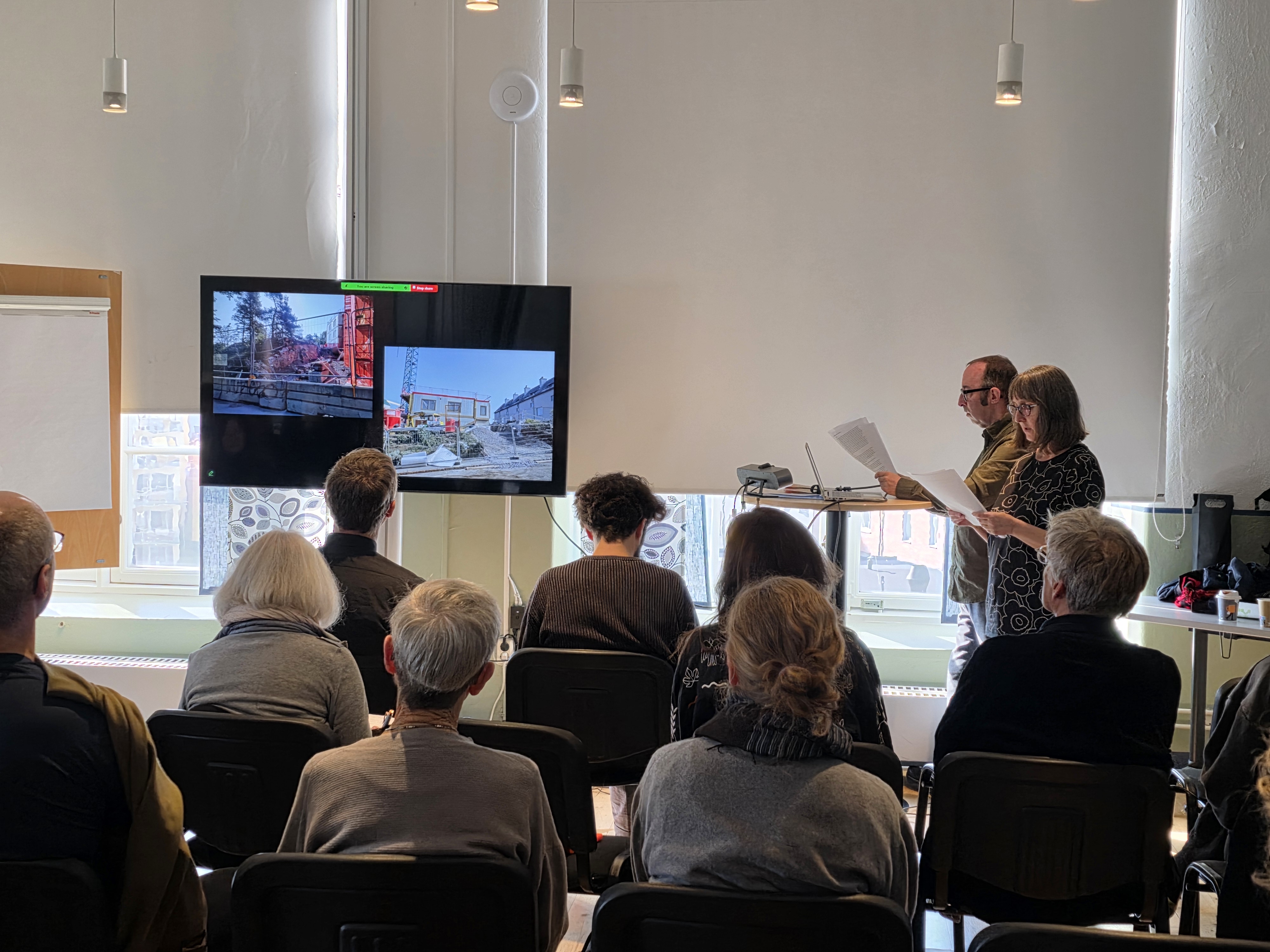
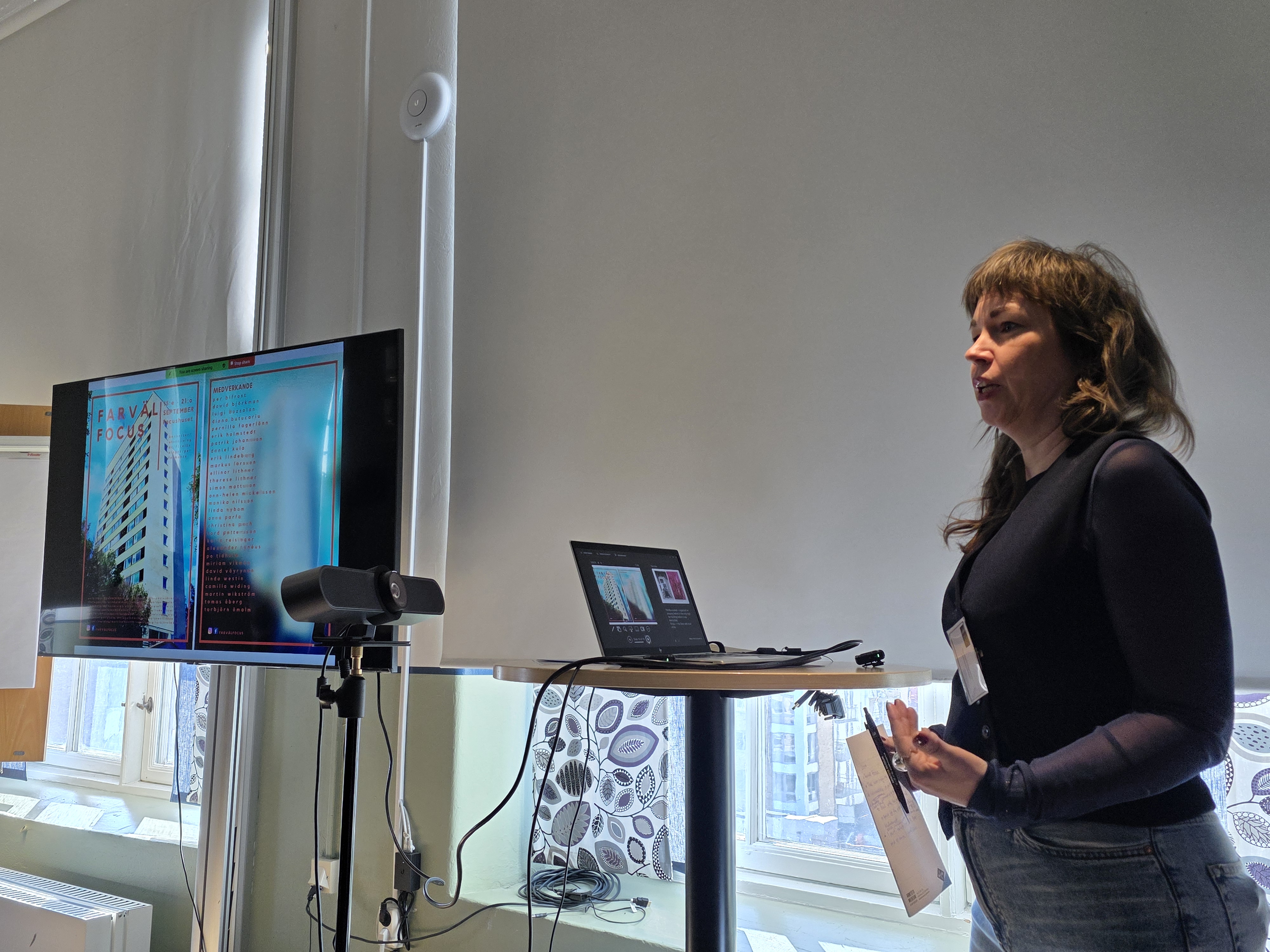
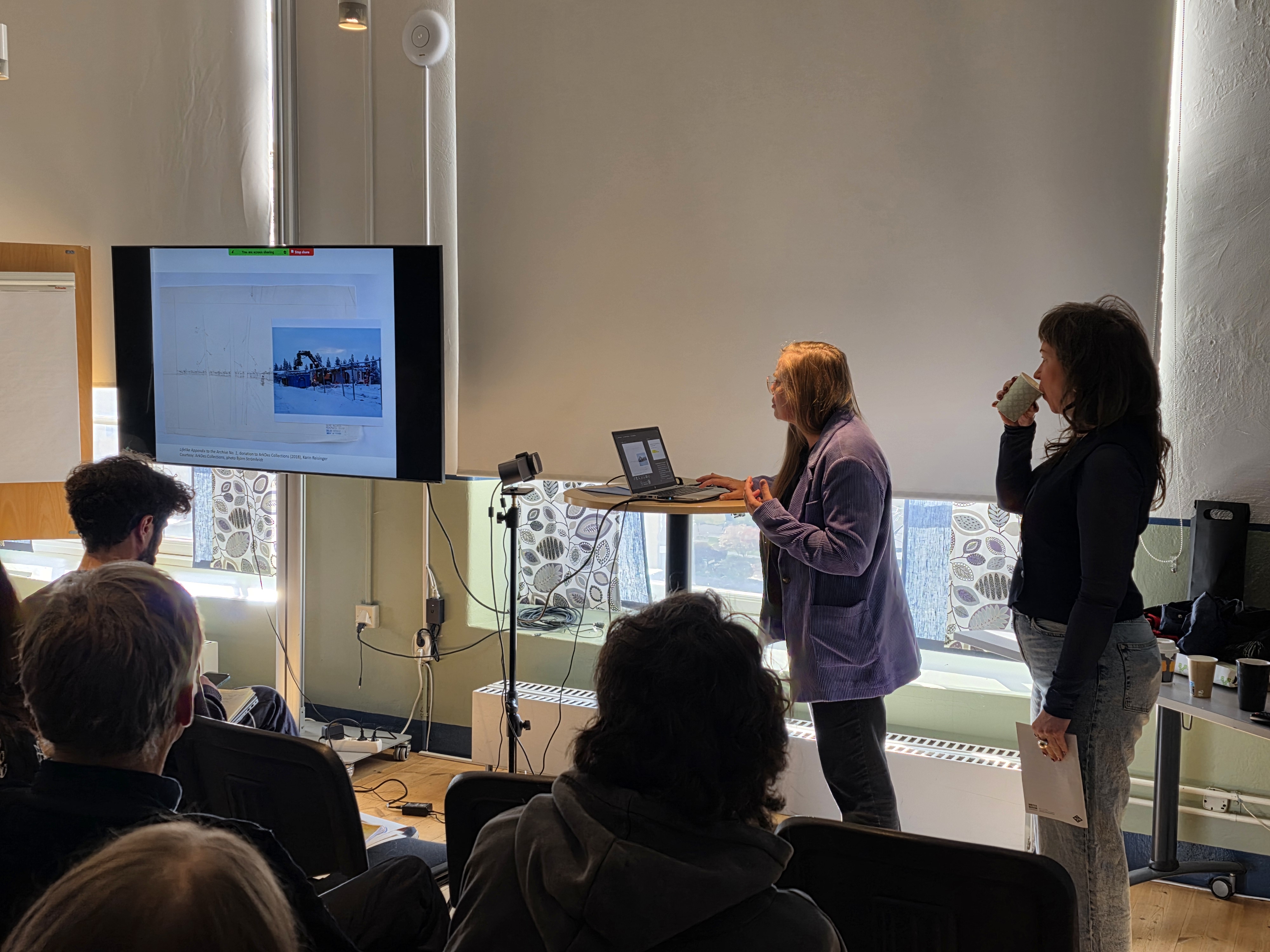
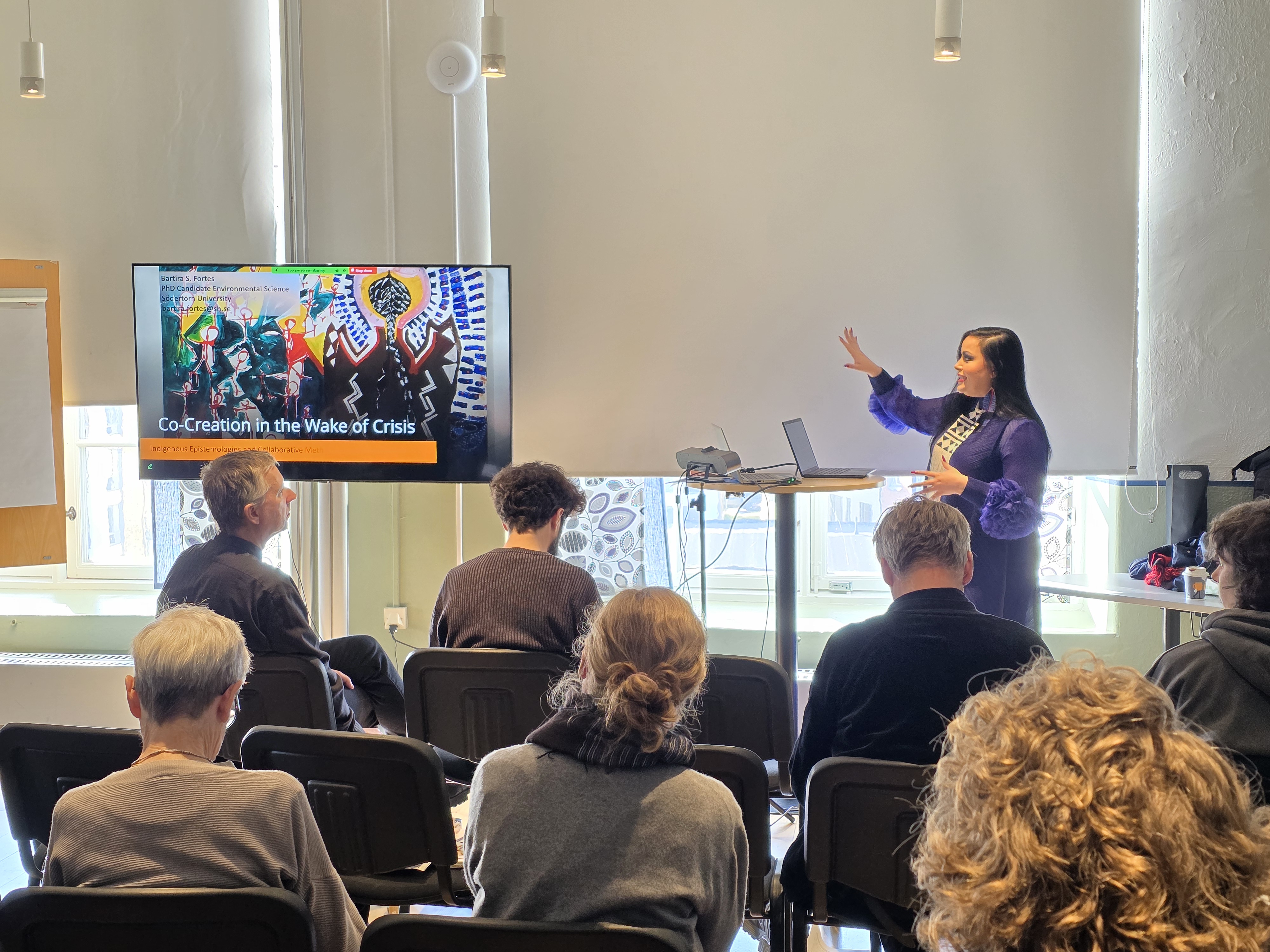
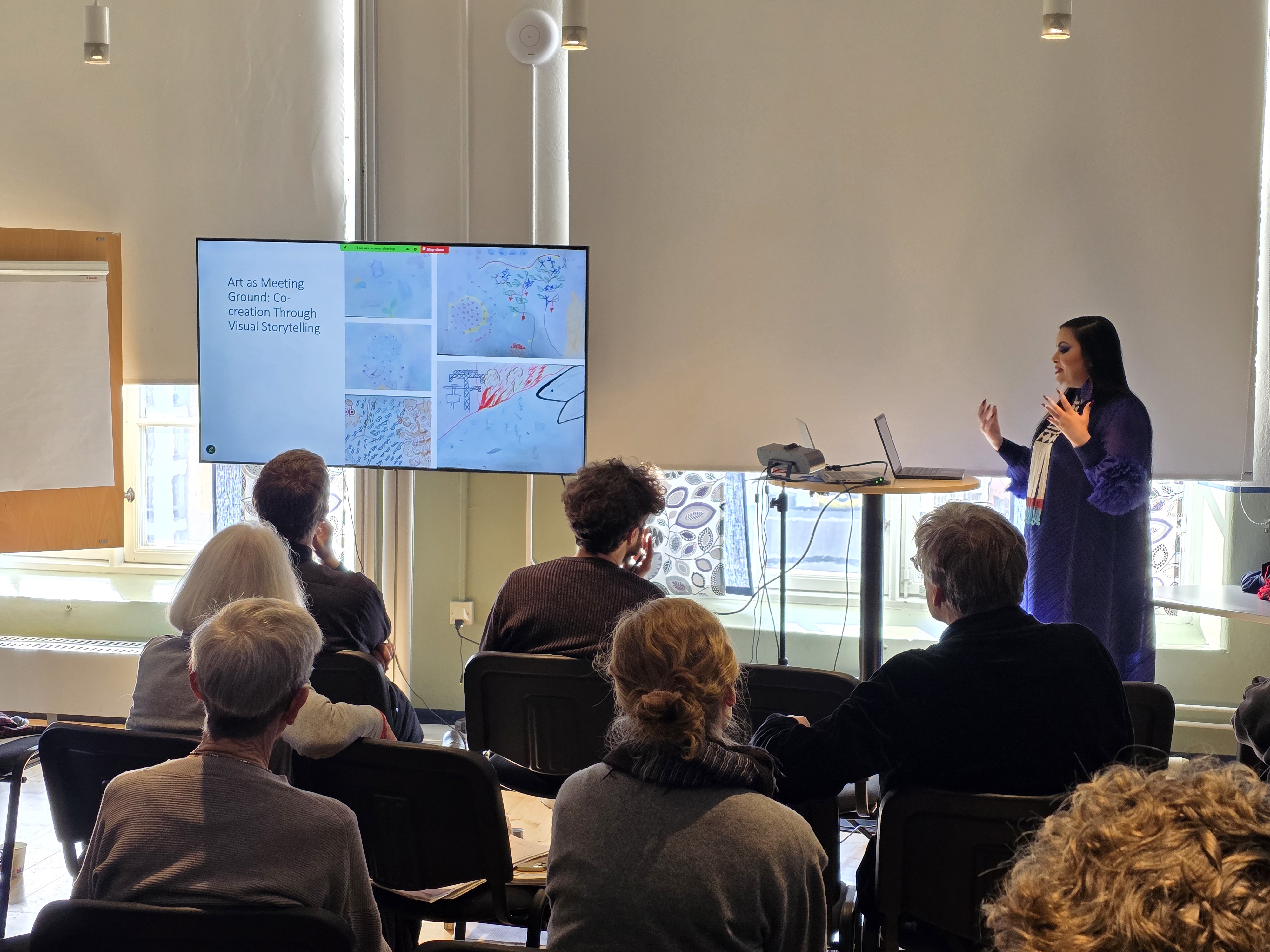
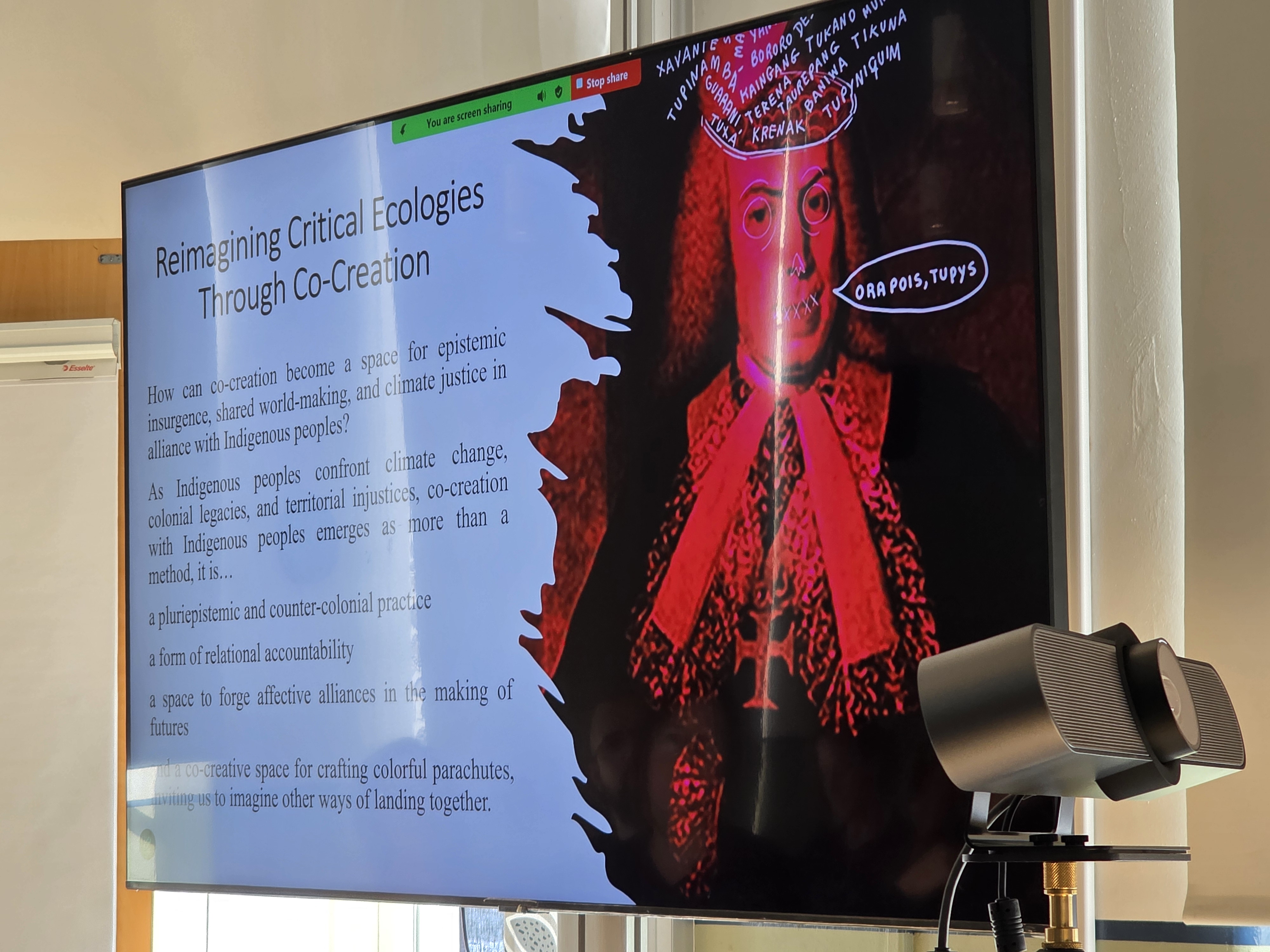
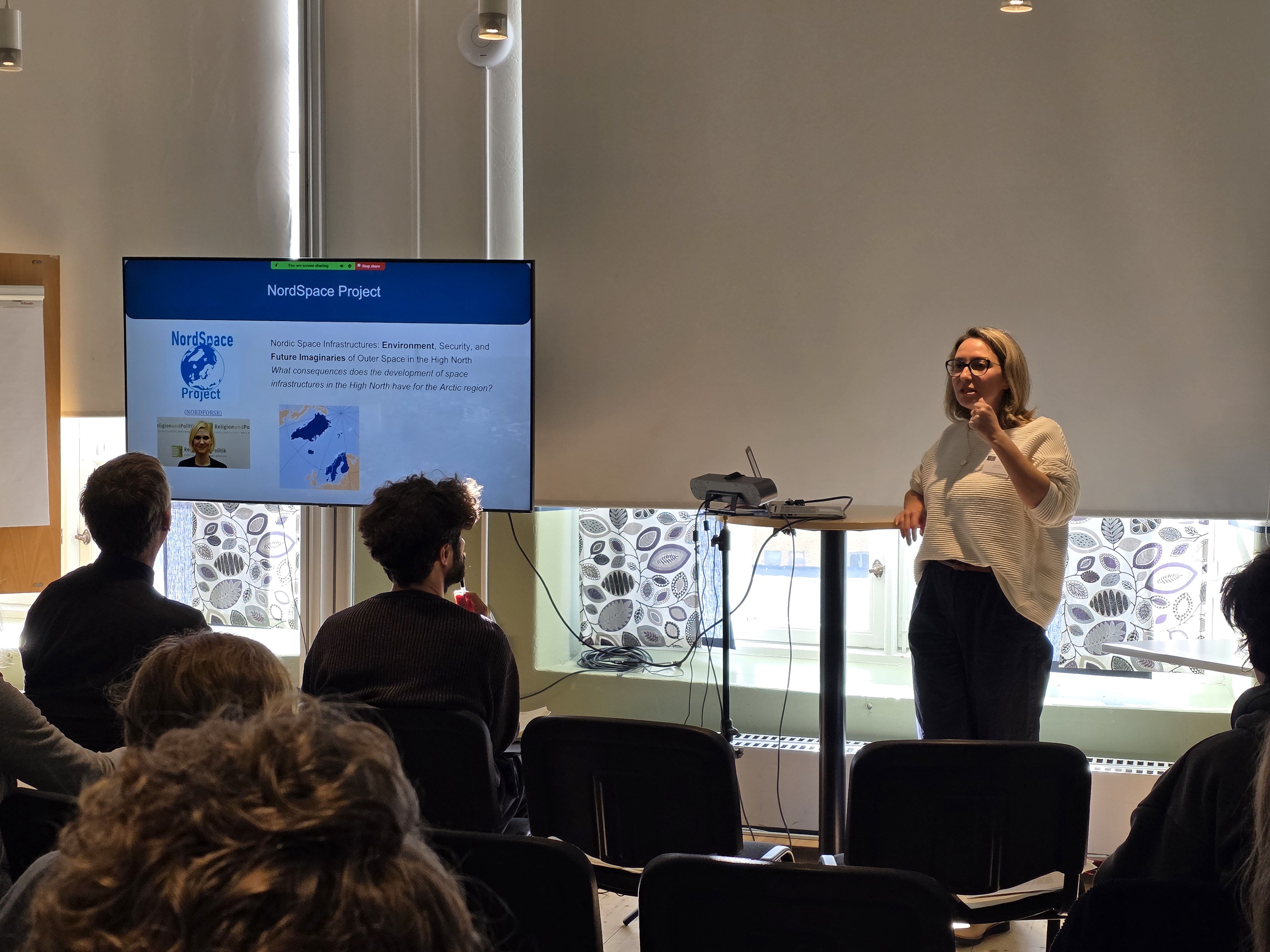
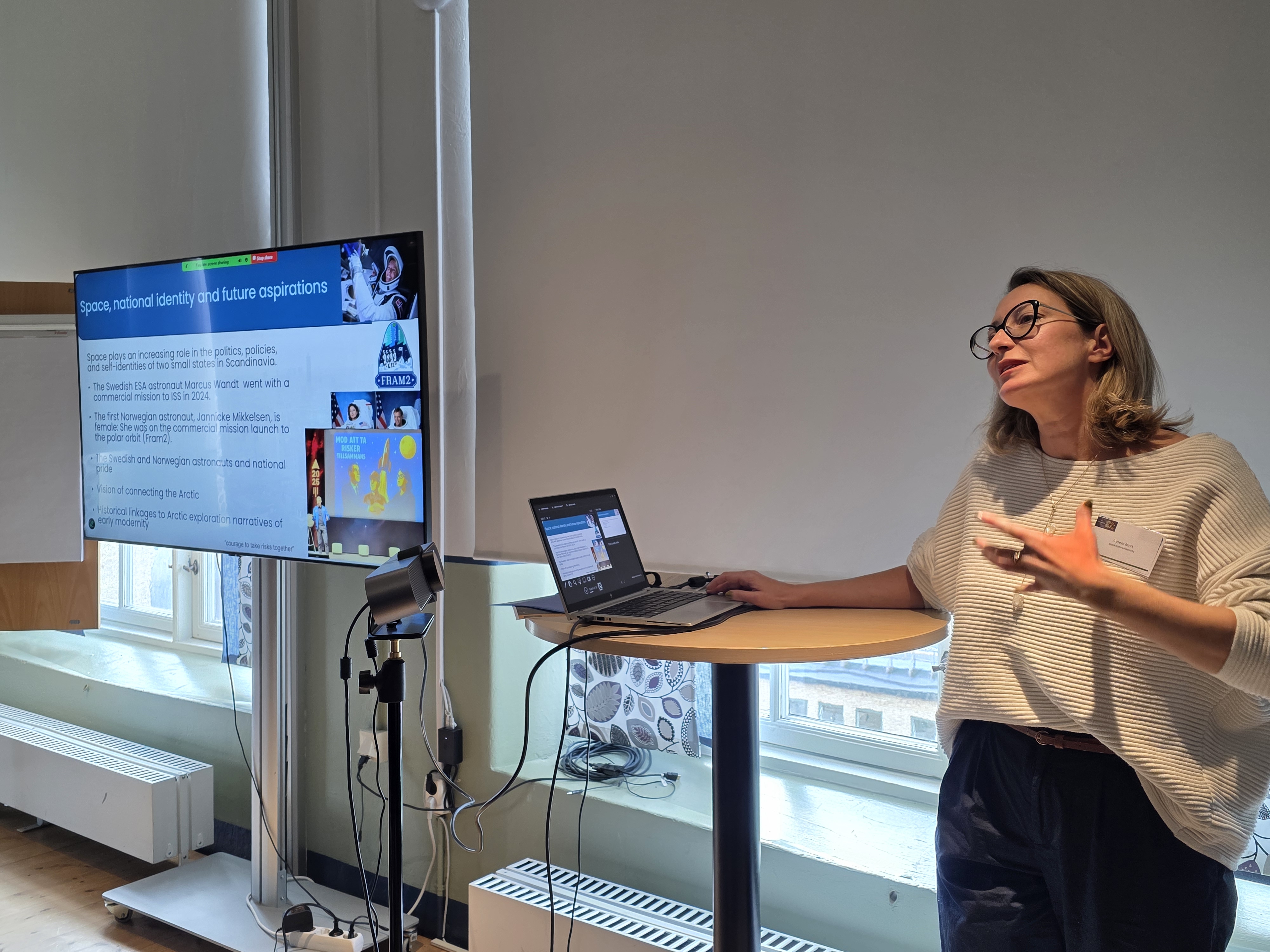
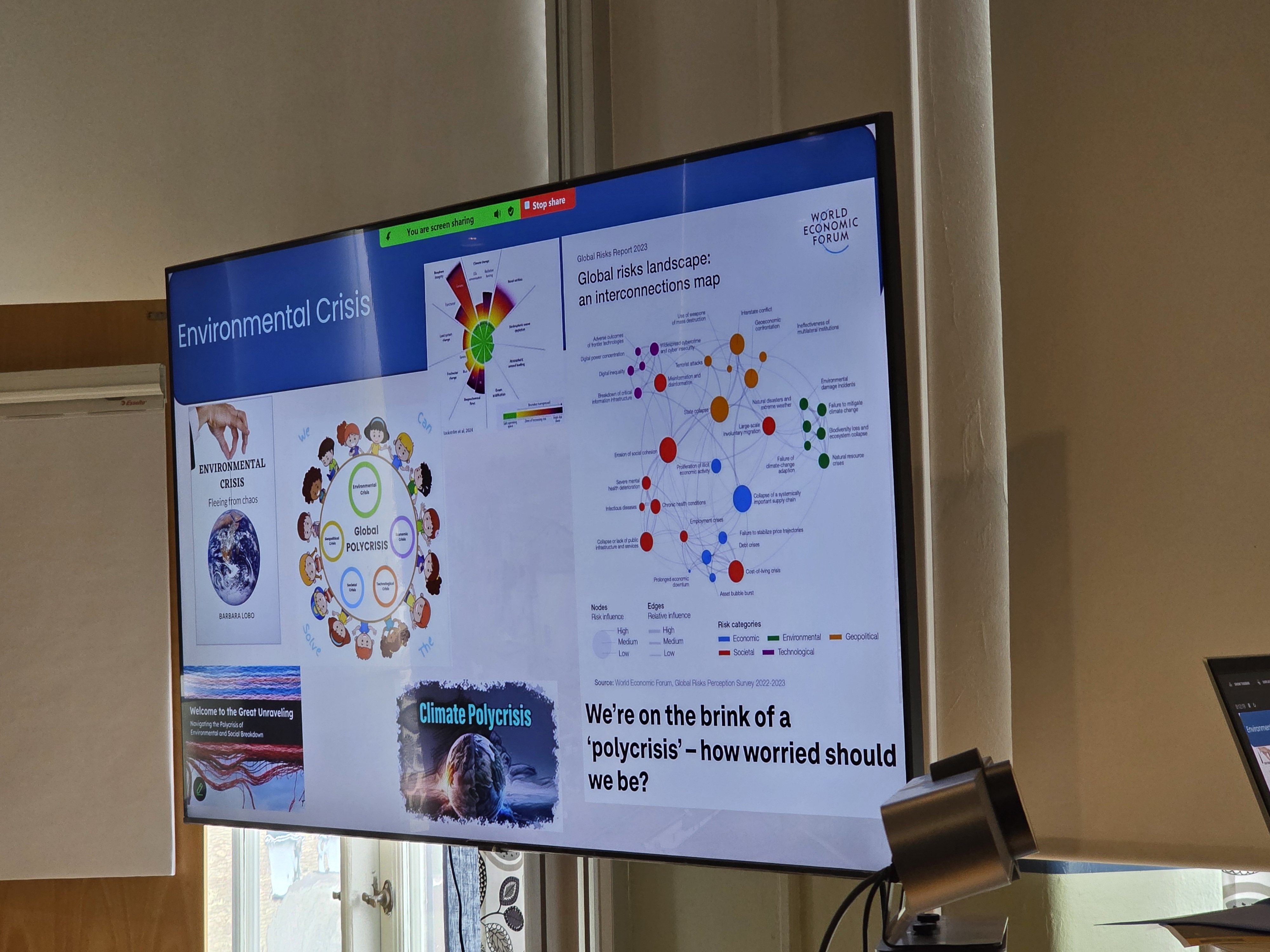
The final symposium panel consisted of five diverse critical and creative interventions. Artist and PhD researcher Erich Berger (University of Oulu, FI) zoomed in on how art can contribute to the process of re-examination and the renewal of scales in society, while departing from the idea that the Anthropocene condition should be understood as a crisis of scale, demonstrating a dis-juncture between contemporary life and the planetary rhythms forming the material conditions of human existence. Drawing on practices from Stone Age Scandinavia and contemporary modes of occupation in urban Sweden, archaeologists Prof. Andrew Meirion Jones (Stockholm University) and Dr Hannah Kate Sackett (University of Bath, UK / Stockholm University) explored a rock-centred perspective on human intra-actions over long durations, while asking questions of how rocks come to matter and how such a shift in approach offers possible futures for our wider relationships with the more-than-human, the ‘inert’, and the overlooked. Grounded in their joint long-term collaboration and site-specific work concerning Malmberget (a no-longer existing Swedish mining town located in Sabmé), artist and musician Pernilla Fagerlönn (SE) and researcher and architect Dr Karin Reisinger (University of Applied Arts / Academy of Fina Arts Vienna, AT) focused on the relationship between the place and mourning. By bringing together musical pieces of Fagerlönn’s artistic work and engagement with the material witnesses of rocks and artifacts from Malmberget, the presenters involved the audience in trans-local acts of mourning of the lost environment and community. Locating her critical intervention at the intersection of art, activism and ecological grief, artist and PhD researcher Bartira S. Fortes (Södertörn University) discussed her engagement in the interdisciplinary projects and pedagogies, demonstrating that co-creative practices with Indigenous peoples generate alternative imaginaries that move beyond both techno-fixes and apocalyptic fatalism by reconfiguring knowledge production itself. Finally, political scientists Dr Ayşem Mert (Stockholm University) and Dr Katharina Glaab (NMBU, NO) zoomed in on the transformation of future imaginaries linked to the development of space surveillance technologies in the Arctic region. While focusing on Sweden and Norway as case studies, they asked how space infrastructures in the High North impact future sustainability imaginaries in the Arctic region. Through analysing the narratives of both space communities and local inhabitants, the researchers hoped to find some possibilities of de-colonial modes of imagining the future, relationships with technology, and the more-than-human beyond national borders.
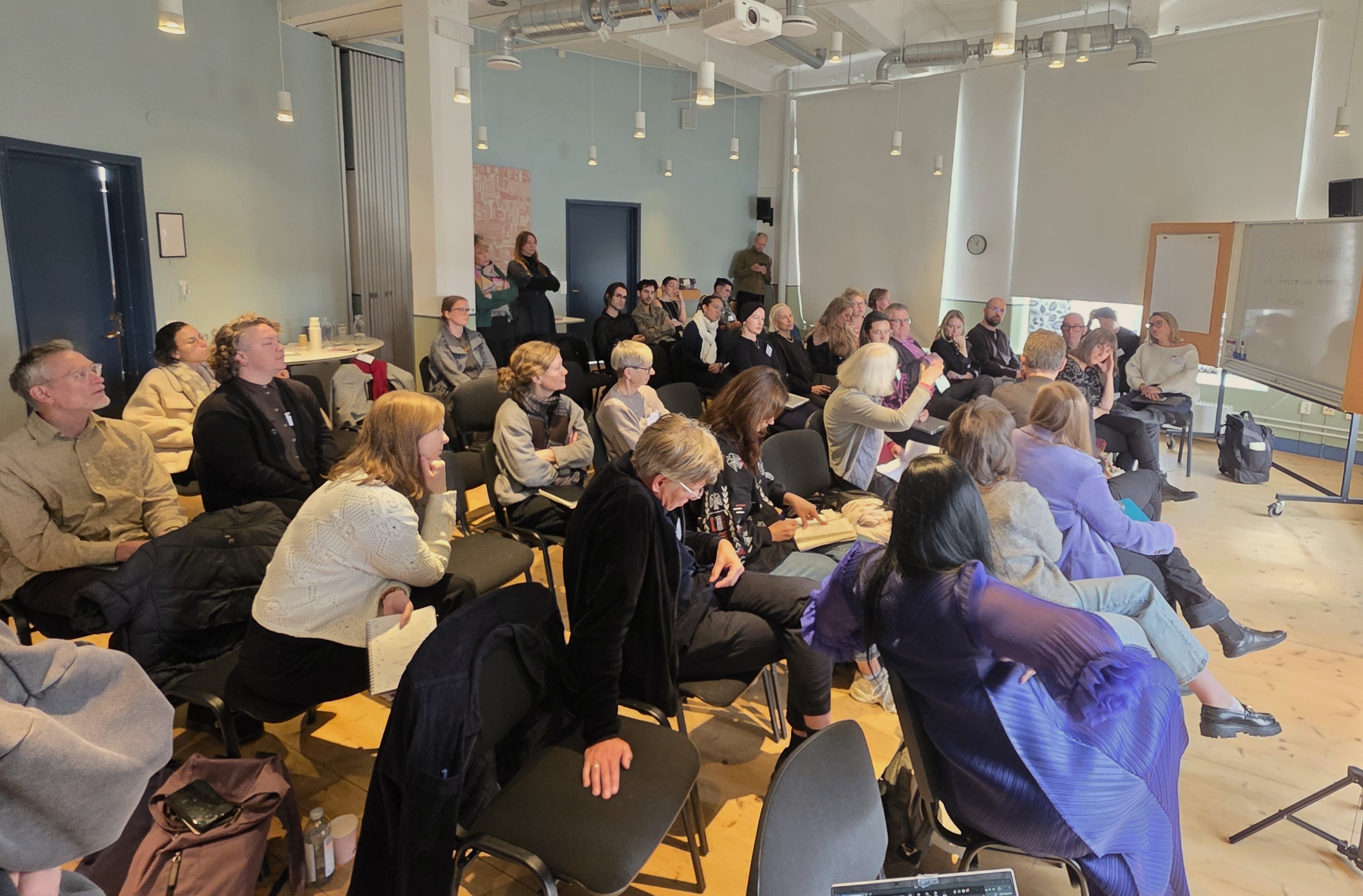
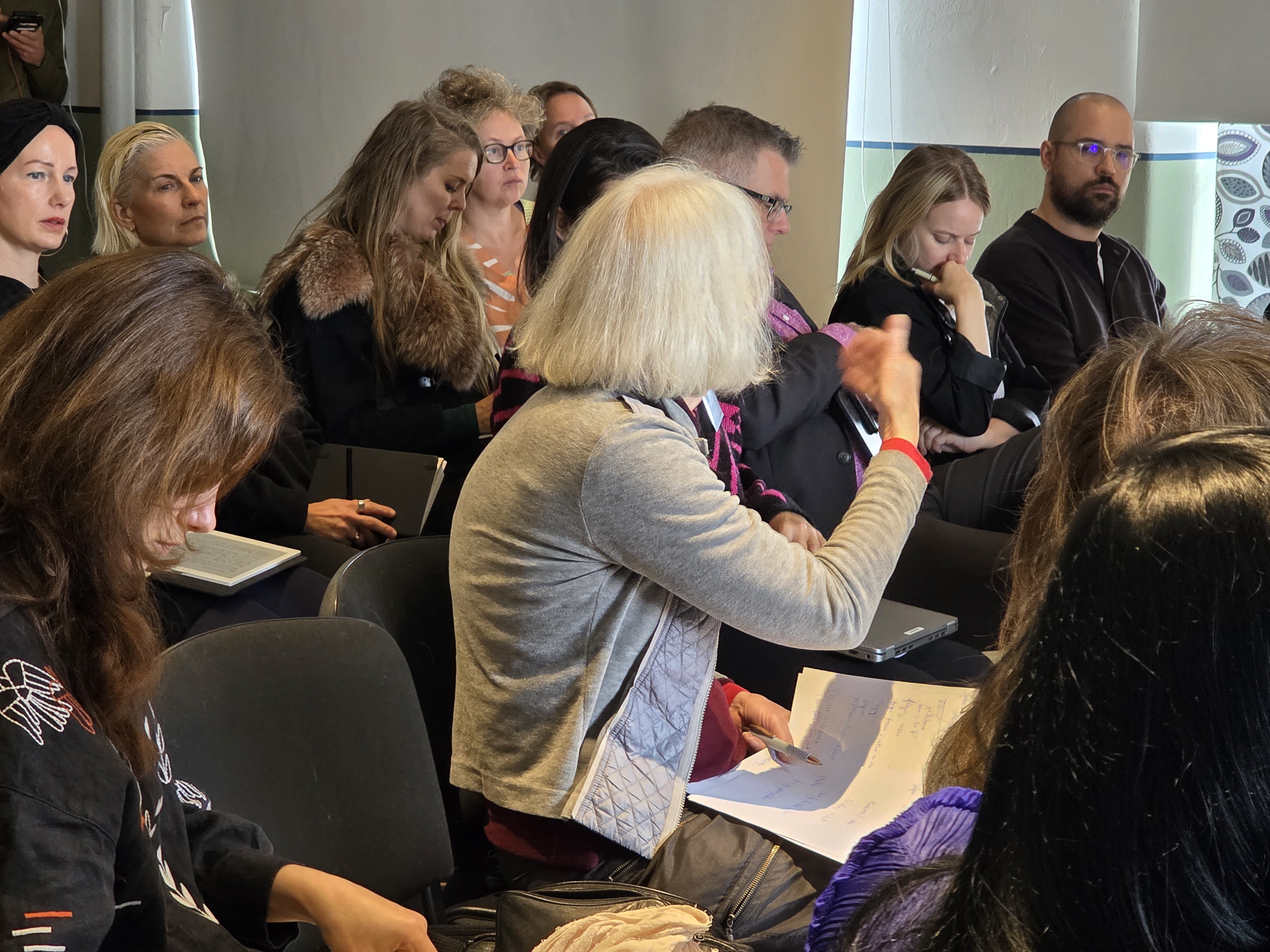
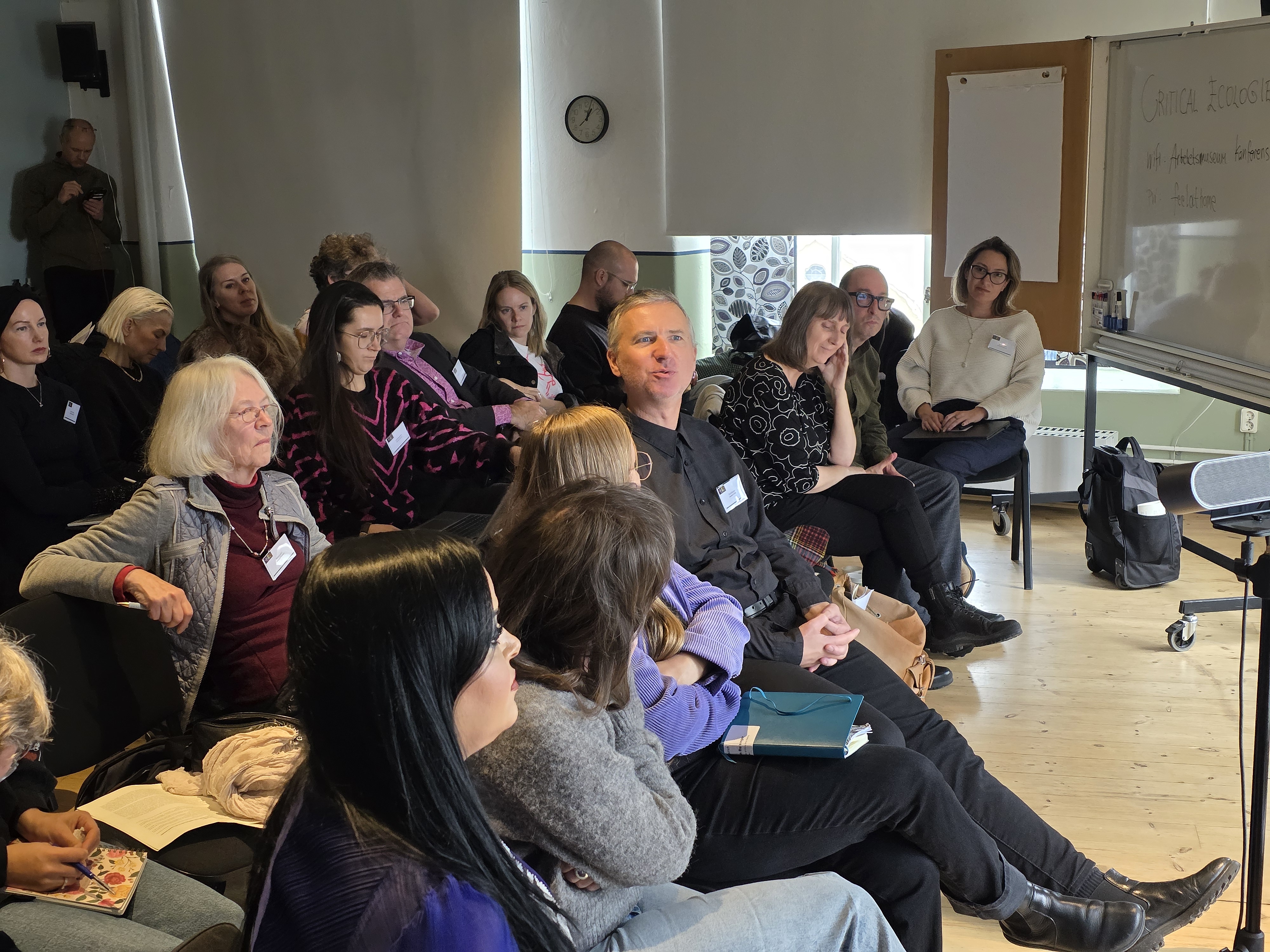
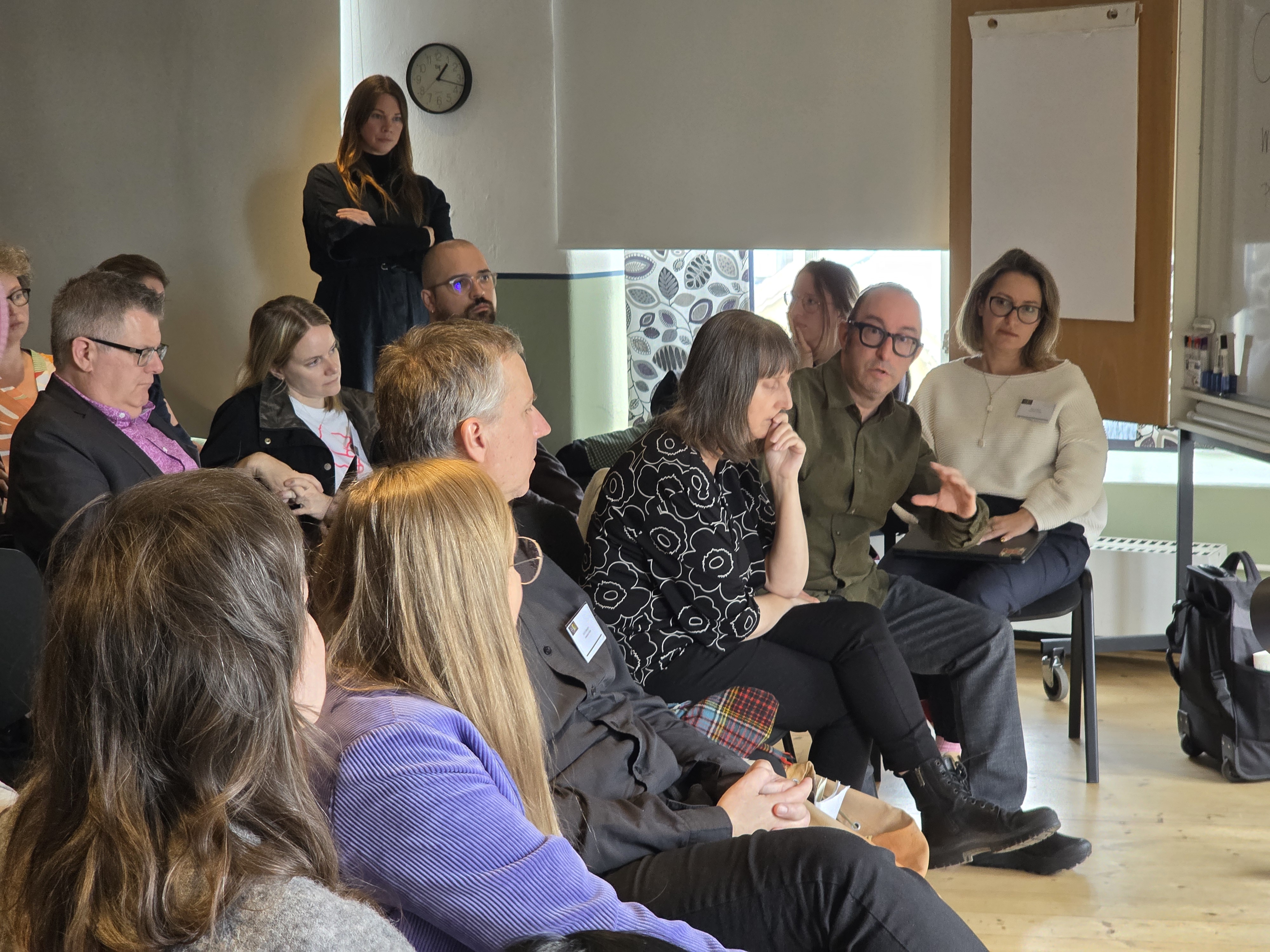
In this way, over the course of two October days, we were taken on a tour de force: from ecologies of death in wildfires, imagining futures beyond the ‘techno-fix vs impending doom’ scenario, and citizen science’s impact on Swedish environmental legal practices; through deep-time and deep-future critical ecologies, more-than-human agencies, practices of care and curation, the role of creative methods and art, environmental health, nature-positive technologies; to questions of extractivism, ecological grief, biodiversity and environmental loss, Indigenous practices, knowledges, and collaborations, as well as imagining futures. All these matters are of vital relevance to the ongoing, transdisciplinary work towards sustainability transformations.
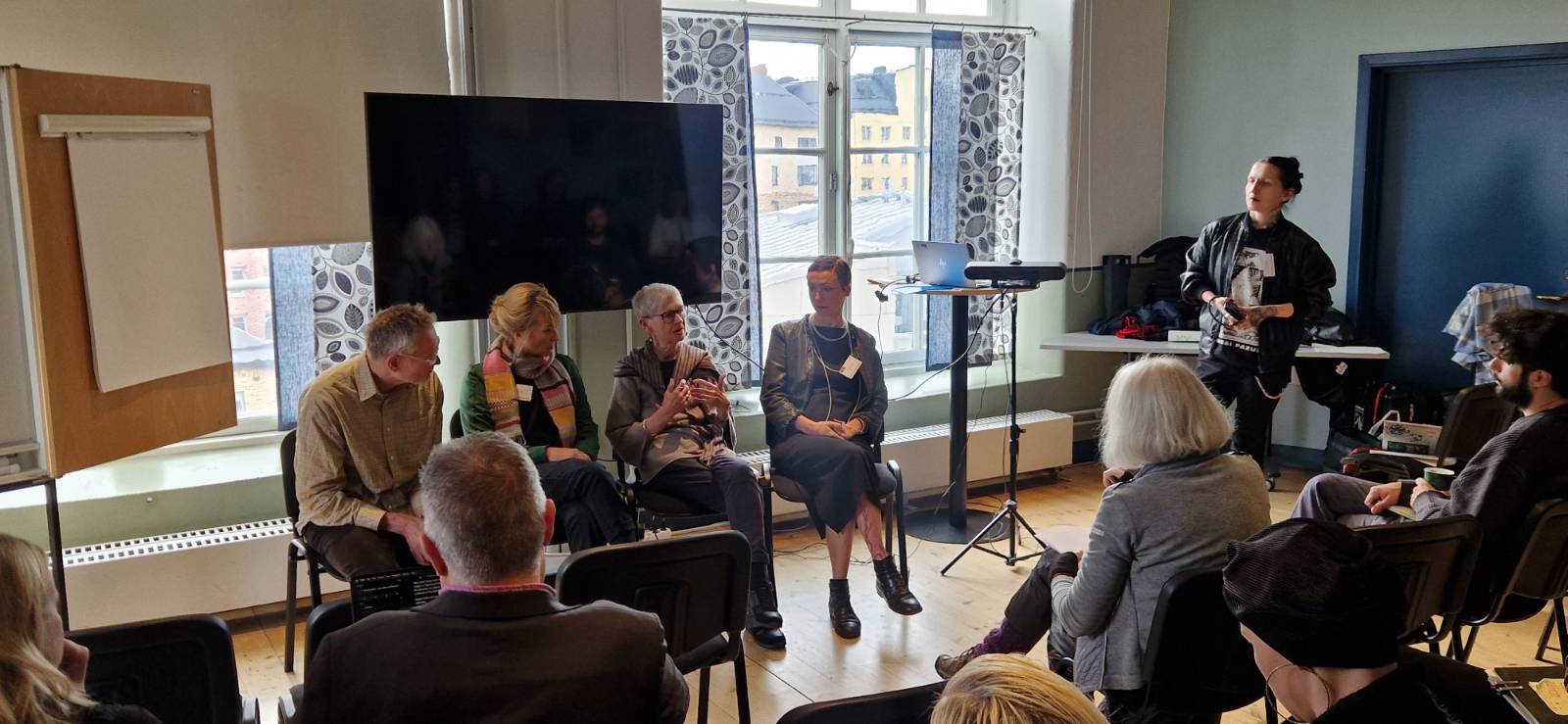
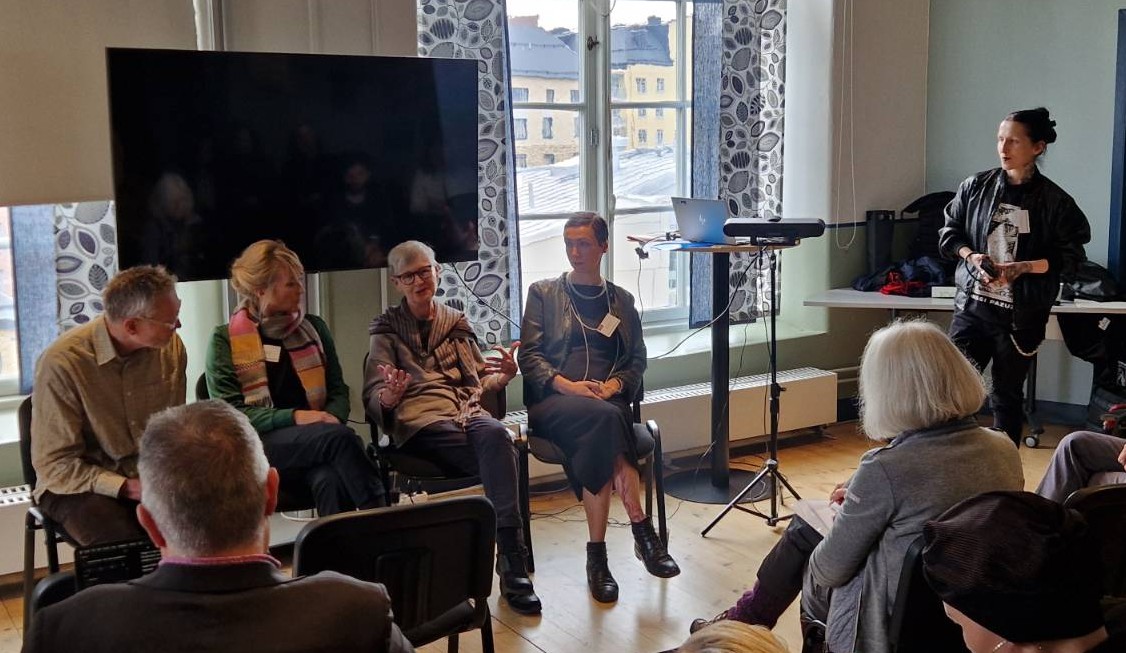
For those of you curious about the details, feel free to check the symposium booklet HERE.